Edition
19 October 2026

UK
| Story | UK prominence | Neutrality | Lead story at | Top 3 at |
|---|---|---|---|---|
| Burnham says Neets crisis is an economic catastrophe and moral failure | 9 | 6 | The Times (front) | BBC (UK online), The Guardian (front) |
| Children’s commissioner warns of a postcode lottery in children’s services | 8 | 8 | Metro (front) | BBC (UK online) |
| Man and woman sought after police officer shot in Nottingham city centre | 7 | 9 | None (widely carried) | Sky News (UK online), Channel 4 (online) |
| Passengers who play loud music on buses could face £100 fines | 7 | 7 | None | Sky News (UK online), Daily Express (online) |
| Up to 20 maternity units in England may have to shut, NHS leader warns | 7 | 6 | None | None (Guardian exclusive) |
World
| Story | World prominence | Neutrality | Lead at | UK pickup |
|---|---|---|---|---|
| Macron calls for calm after riots across France lead to about 2,400 arrests | 10 | 6 | BBC (homepage), The Guardian (front), DW | BBC, The Guardian (front), Independent (front), The Times, Telegraph, Sky, Mirror, Sun, Channel 4 |
| Trump defends easing Russia sanctions and says Zelensky never wanted to end the war | 9 | 4 | CNN | BBC, The Times, Telegraph, Mirror, Express, Independent, Channel 4 |
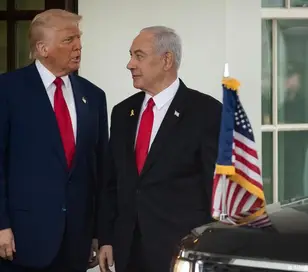
| Trump endorses Netanyahu nine days before Israel’s election | 9 | 6 | None (widely carried) | Sky News, The Times, Telegraph, Independent |
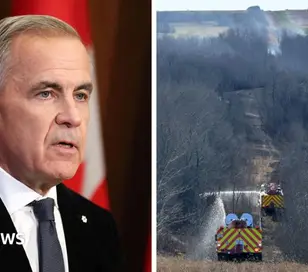
| Four soldiers killed and 19 critically hurt as grass fire sweeps Canadian base | 8 | 9 | ABC News (US) | BBC, Channel 4, Daily Mirror (online lead) |
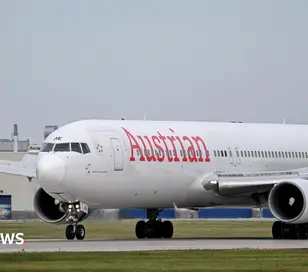
| Tel Aviv to Vienna flight diverts to Bulgaria after bomb threat | 7 | 9 | None (widely carried) | BBC, Sky News, The Telegraph, The Sun |
What the world is leading with
The five stories leading foreign news today that weren’t already in our UK or World lists, and how much attention UK outlets gave them.
| Story | World prominence | UK attention | Neutrality | Lead story at | UK coverage at |
|---|---|---|---|---|---|
| Trump approval hits second-term low in NBC poll ahead of midterms | 8 | 3 | 6 | NBC News, New York Times | The Guardian, Independent |
| Saudi tower sends workers home as Gulf states condemn Houthi attacks | 8 | 3 | 5 | Al Jazeera | The Telegraph, Independent (Egypt angle) |
| Pope Leo says he will gradually resume duties after lung cancer surgery | 7 | 7 | 9 | None (widely carried) | BBC, The Guardian, The Times, Sky, Independent, Mirror, Express |
| Kenya confirms eighth Ebola case as Congo outbreak spreads | 6 | 2 | 9 | None (widely carried) | Independent |
| Lula and Flavio Bolsonaro trade insults in first debate before Brazil’s run-off | 6 | 1 | 6 | None (top stories at Al Jazeera) | None |
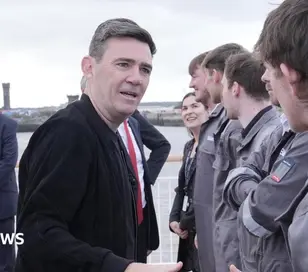
1. Burnham calls almost a million young people out of work or training an economic catastrophe and moral failure
Prime Minister Andy Burnham has warned that the UK faces an “economic catastrophe and moral failure” because almost a million people aged 16 to 24 are not in education, employment or training, a group known as Neets. Writing in Monday’s Times, he said the country should “invest in the success of our young people” rather than “pay for failure through the benefits system”, adding that “benefits will become the backstop, not the starting point”.
Burnham blamed two years of Covid lockdowns, social media that erodes young people’s “confidence and sense of belonging”, an education system focused on the “university route”, too few job opportunities and the failures of previous governments. He said the welfare system currently offers “an assessment, a payment and, after that, goodbye”, and that it would in future begin with young people’s ambitions rather than their benefit entitlements, while the safety net would remain for those who cannot work.
The BBC reported that ministers are expected this week to announce tens of thousands of new youth apprenticeships and placements in construction and at accounting, consulting and legal firms. A full review of young people and work by former health secretary Alan Milburn is due next month. The Guardian and The Telegraph reported that Milburn wants money shifted from welfare into employment support, saying “this is not a workshy, snowflake generation”. Shadow business secretary Julia Lopez said Labour had “been a disaster for youth jobs”, blaming tax rises and red tape.
How it was framed
- The Times (UK, commercial) · Andy Burnham: How I will end moral failure of the Neets crisis (headline and summary). Focus 6: The prime minister’s own argument in his own words, setting out the problem and his welfare shift persuasively but with no opposing voices or independent assessment of the plans.
- BBC (UK, public-service) · Burnham warns of Neets-fuelled ‘economic catastrophe and moral failure’. Focus 8: Leads with the official figures and the prime minister’s diagnosis, then adds the expected apprenticeship plans, the Milburn review and a Conservative response, giving a rounded factual account.
- The Guardian (UK, commercial) · Milburn urges the government to cut welfare spending to fund support for young people (front page, as summarised). Focus 7: Puts the review author’s call to redirect welfare money at the centre, a policy-led framing that explains the debate well but gives less space to the prime minister’s own case.
- The Telegraph (UK, commercial) · Alan Milburn urges Burnham to cut welfare to fund job support (headline). Focus 6: Frames the story around cutting welfare, a sharper political angle than the review’s wider argument about support and opportunities, though the headline stays attributed and factual.
- Daily Express (UK, tabloid) · UK ‘worse than Bulgaria’ in parts of Britain under Labour - ‘lost generation’ (headline). Focus 4: Leads with a comparison to Bulgaria and a party-political charge against Labour, putting blame and alarm ahead of the youth employment figures and the policy detail behind them.
Neutrality: 6/10. Outlets agree on the scale of the problem, but some frame it as Burnham’s moral case, others as a welfare-cutting story or a charge against Labour.
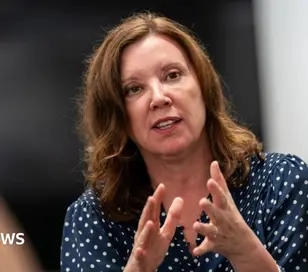
2. Children’s commissioner says a postcode lottery is leaving services for children in a state of emergency
Services for children in England are in a “state of emergency” and young people face extreme and unfair inequality depending on where they live, according to a new report from the Children’s Commissioner for England, Dame Rachel de Souza. Her report, called the Childhood Lottery, analysed a hundred measures covering health and social care, education, safety and play, and concluded that a “postcode lottery” has produced a “litany of failures”, the BBC reported.
The report found that deprivation alone could not explain the differences. Haringey in north London scored highly despite high deprivation, while Cambridge ranked lower despite being one of the least deprived areas. Middlesbrough, Hounslow, Bradford, Nottingham, Halton, Peterborough, Leicester, Liverpool, Sunderland and Medway were ranked the hardest places to grow up, while Cheshire East, Merton, Surrey and Richmond upon Thames were among the least challenging.
The gaps were stark, the BBC said. A child waited six days for a mental health referral in Leicester but 118 days in Hampshire and the Isle of Wight. In Richmond upon Thames, 70% of children got good English and maths GCSEs, against 31% in Knowsley, and four council areas spent nothing on youth services per teenager. The Metro, which led on the report, said children in Blackpool were 27 times more likely to miss school than those in Lambeth. Dame Rachel called for minimum standards for children’s services, an emergency fund for improvements and a bigger role for large councils and mayors.
How it was framed
- BBC (UK, public-service) · ‘Postcode lottery’ driving children’s inequality in England, commissioner warns. Focus 9: Sets out the commissioner’s method, rankings and specific gaps in services, and notes that deprivation alone did not explain the results, a detailed account that keeps to the report’s findings.
- Metro (UK, tabloid) · Front page on inequalities for children depending on where they are brought up, quoting ‘the postcode lottery is real’ (as summarised). Focus 7: Leads with a striking school absence comparison and the phrase ‘damning findings’, vivid framing that stays on the report’s evidence while choosing its most dramatic figures.
- Independent (UK, commercial) · Stark new report names the ‘hardest places to grow up’ in England (headline). Focus 7: Focuses on the list of hardest places to grow up, an accessible league-table angle that stays factual but gives less weight to the report’s call for minimum standards.
- Daily Mirror (UK, tabloid) · Hardest places for kids to grow up in England identified in report - full list (headline). Focus 6: Packages the report as a full list of places, which is reader-friendly but turns a national finding about services into a ranking of towns.
Neutrality: 8/10. Coverage is closely aligned on the report’s findings, differing mainly in whether it leads with the rankings or the call for national standards.
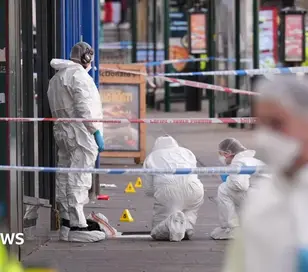
3. Man and woman sought after police officer is shot in Nottingham city centre
Detectives are searching for a man and a woman who fled after a police officer was shot in Nottingham city centre in the early hours of Sunday. Nottinghamshire Police said the officer had approached the two suspects in Angel Row shortly before 04:50 BST, the BBC reported. The officer is in a stable condition in hospital with a wound to his foot.
A firearm was found at the scene and could be seen within the police cordon, the force said. Sky News and The Sun published pictures of the gun, and the Daily Mail reported that the weapon was a sawn-off shotgun. Angel Row, a street lined with fast food outlets and shops, remained closed by a large police scene until Sunday evening, and the cordon was extended to St James’s Street. The force said there would be a heightened police presence while the investigation continued.
Assistant Chief Constable Claire Rukas called it “a shocking incident and a sobering reminder of the potential dangers faced by officers”, and appealed for anyone with information to come forward, saying “even the smallest bit of information could make all the difference”. Nottinghamshire Police and Crime Commissioner Gary Godden thanked members of the public who helped the injured officer and said firearms incidents like this were “extremely rare”. Nottingham City Council leader Neghat Khan said she was “deeply shocked and saddened” and that every available resource was being deployed. The Express reported that police described “rapid progress” in the investigation.
How it was framed
- BBC (UK, public-service) · Suspects hunted after police officer injured in shooting in Nottingham city centre. Focus 9: A careful factual account built on police statements, giving the time, the injury and the appeal for information without speculating about the suspects or their motive.
- Sky News (UK, commercial) · Gun pictured at scene after police officer shot in Nottingham - as suspects hunted (headline and summary). Focus 8: Leads with the image of the gun at the scene, a strong visual hook, while keeping the rest of the account to confirmed details from the police.
- The Times (UK, commercial) · Nottingham shooting: hunt for suspects continues after officer shot (headline). Focus 9: Plain factual headline on the manhunt and the officer’s shooting, with no added colour or speculation about the people involved.
- The Guardian (UK, commercial) · Nottinghamshire police officer in hospital after being shot in the foot (headline). Focus 9: Gives the precise injury and the officer’s condition in a sober headline that avoids dramatising the incident or guessing at the circumstances.
- Daily Mail (UK, commercial) · Police officer ‘shot with sawn-off shotgun’ in city centre - as cops launch manhunt for suspect couple (headline). Focus 6: Leads with the weapon type in quotation marks and calls the suspects a couple, more dramatic framing that adds unconfirmed detail beyond what police had set out.
- The Sun (UK, tabloid) · Gun recovered after police officer shot in major UK city centre as cops launch hunt for man and woman on the run (headline). Focus 7: Factual on the gun and the manhunt, though the phrasing of a suspect pair on the run leans towards drama rather than the police appeal.
- Daily Express (UK, tabloid) · Major update on Nottingham police officer shooting investigation - ‘rapid progress’ (headline). Focus 7: Teases a major update and quotes rapid progress, a factual development presented with a clickable framing that reveals little in the headline itself.
- Channel 4 (UK, public-service) · Police officer wounded after shooting in Nottingham (headline). Focus 9: Short, neutral headline on the shooting itself, without added interpretation, colour or any speculation about the two suspects or their motive.
- CGTN (China, state) · A police officer has been shot in Nottingham city center, approaching two suspects in Angel Row (summary). Focus 9: Closely follows the police statement on the location and the two suspects, a straight wire-style account with no added framing.
Neutrality: 9/10. Outlets broadly agree on the facts from Nottinghamshire Police, with tabloids adding more dramatic detail about the weapon and the suspects.
4. Passengers who play loud music on buses could face £100 fines in antisocial behaviour crackdown
Passengers who play loud music on buses in England could be fined up to £100 under a government crackdown on antisocial behaviour on public transport, the BBC reported. The measures also target littering, vaping and threatening behaviour. The government said it had issued new guidance to local authorities on powers introduced earlier this year, which let them set new rules on buses, subject to sign-off by the transport secretary.
The government said bus drivers would not be responsible for enforcement, which would fall to authorised officers including Transport Safety Officers and the police. Under existing powers on the railways, passengers who refuse to stop playing music can be removed from a train or fined up to £1,000, a figure the Mirror and the Express put in their headlines. A national campaign asking rail passengers to “share the carriage, not the noise” is also being launched across operator websites, social media and carriages.
“We’ve all been on the train when someone starts blasting music or videos from their phone. It gets on your nerves and can quickly spoil the journey,” said Prime Minister Andy Burnham. Transport Secretary Heidi Alexander said small changes in behaviour could make a big difference. The TSSA union called the move “a step in the right direction” but urged ministers to confront violence and abuse against passengers and staff and to fund British Transport Police. The Campaign for Better Transport welcomed it but questioned how the rules would be enforced.
How it was framed
- BBC (UK, public-service) · People playing loud music on buses could face £100 fine. Focus 8: Explains the new powers, who will enforce them and the existing rail penalties, and includes both welcome and doubts about enforcement, a balanced and practical account.
- Sky News (UK, commercial) · Fines up to £100 for playing music out loud on buses announced in new antisocial behaviour crackdown (headline and summary). Focus 8: Straightforward account of the fines and the wider crackdown, staying with the government’s announcement and the practical detail of the plans.
- The Guardian (UK, commercial) · Andy Burnham launches campaign against ‘headphone dodgers’ on public transport (headline). Focus 6: Frames the policy around the prime minister and a catchy label for offenders, which draws attention to the politics more than to the enforcement details.
- Independent (UK, commercial) · Burnham launches war against ‘headphone dodgers’ as people who play music on buses face £100 fine (headline). Focus 6: Uses the language of a war on offenders and centres the prime minister, before reaching the factual detail of the £100 fines.
- Daily Mirror (UK, tabloid) · Nuisance passengers who blast out music on trains face fines of up to £1,000 (headline). Focus 6: Leads with the bigger £1,000 rail figure, which already exists, rather than the new bus fines, giving a slightly misleading sense of what has changed.
- Daily Express (UK, tabloid) · Andy Burnham to hit bus and train passengers with £1,000 fines for not using headphones (headline). Focus 4: Personalises the policy as Burnham hitting passengers and pairs it with the larger existing rail fine, a combative framing that overstates the new measures.
Neutrality: 7/10. The facts are not disputed, but some outlets lead with the existing £1,000 rail fine or frame the policy as Burnham’s personal campaign.
5. Up to 20 maternity units in England may have to shut, NHS leader warns
Up to 20 maternity units in England may have to close or change their role to ensure safe care for mothers and babies, an NHS leader has warned. Matthew Hopkins, director for acute care at the NHS Alliance, told the Guardian that centralising childbirth services in fewer hospitals was “inevitable” and “the right thing”, and urged ministers and MPs to show “courage” and “grasp the nettle”, even though it would mean some expectant mothers travelling further.
Hopkins said that as many as 20 of England’s 155 consultant-led units would need to shut or change, and that smaller units delivering 1,500 to 2,000 babies a year were becoming increasingly unsustainable because of a shortage of obstetricians and a sharp rise in caesarean sections. Many of the units most at risk are in rural or coastal areas, he said, adding that the current configuration was “not fit for purpose”. The BBC reported the same warning under the headline that maternity care organisation is not fit for purpose.
Hospital bosses fear the government’s maternity taskforce, due to report before Christmas, will be “tokenistic” if it does not address the rise in caesareans, the Guardian said. The comments provoked an immediate outcry. Hannah Leonard of the Royal College of Midwives said women and families “rely on local maternity units to be there when they need them”. Dr Alison Wright, president of the Royal College of Obstetricians and Gynaecologists, said there were “other solutions to our workforce challenges that are far safer than closing maternity units”.
How it was framed
- The Guardian (UK, commercial) · Up to 20 maternity units in England may have to shut, NHS leader warns. Focus 7: An exclusive led by the most striking number, but it carries the reasons given and the immediate objections from midwives and obstetricians, keeping the debate in view.
- BBC (UK, public-service) · NHS leaders say maternity care organisation is ‘not fit for purpose’ (headline). Focus 8: Frames the story around the system’s organisation rather than closures, a measured attributed headline that stays on the NHS leaders’ assessment.
Neutrality: 6/10. Only two major outlets have the story so far, and they differ on whether closures or the wider state of maternity services is the headline.
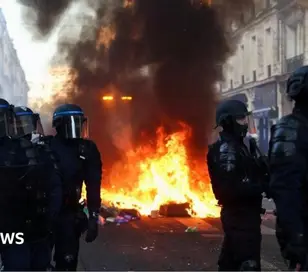
6. Macron calls for calm and order as France counts the cost of riots that led to about 2,400 arrests
French President Emmanuel Macron has called for “calm and order” after a day of mass protests turned into rioting and looting on Saturday, with smaller clashes continuing in Paris and Lyon on Sunday. In a national address from the Élysée Palace, he said “we all feel anger and shame”, that “nothing justifies” the “unbridled” violence and that those responsible would face justice, while drawing a distinction between protesters’ “legitimate demands” and “those who destroyed, smashed and looted”.
Some 550,000 people marched, largely peacefully, against rising fuel prices, the cost of living and deteriorating public services including schools, the BBC reported. Police arrested about 2,400 people, according to the interior ministry, which said about 1,000 officers were injured on Saturday. An estimated 1,500 shops and businesses were looted or destroyed, and the 19th-century town hall in Limoges was gutted by fire. Prime Minister Sébastien Lecornu is holding a crisis cabinet meeting on Monday, and France 24 and Arab News reported that Macron refused his interior minister’s resignation.
Opposition leaders attacked the government. RT quoted Marine Le Pen calling Macron a president “without credibility or authority” and Jordan Bardella demanding that he apologise and step down, while Jean-Luc Mélenchon blamed “ten disastrous years”. US President Donald Trump declared that “France is burning”, Fox News reported, and The Telegraph said he blamed the violence on immigration. Iranian state media warned Macron that “a trick may turn against its designer”. The Kremlin said no one took claims of Russian involvement in European riots seriously, TASS reported.
How it was framed
- BBC (UK, public-service) · Macron calls for ‘calm and order’ after riots across France. Focus 8: Leads with Macron’s address and the official arrest figures, then adds residents’ reactions and the scale of the damage, keeping protesters’ grievances distinct from the violence.
- The Guardian (UK, commercial) · Macron criticises ‘unbridled violence’ after days of unrest and 2,400 arrests across France (headline). Focus 8: Pairs the president’s words with the arrest toll in a factual headline, and its front page centres on the damage in Paris rather than political blame.
- The Times (UK, commercial) · Macron rails at ‘ultra left’ as riots lead to 2,400 arrests (headline). Focus 6: Puts Macron’s attack on the ‘ultra left’ first, a political framing that highlights who he blamed ahead of the protesters’ demands and the wider causes.
- The Telegraph (UK, commercial) · France riots: Macron to ban public gatherings over rioting (headline). Focus 6: Leads with a security response and, alongside, comment calling the riots the death throes of Macronism, leaning towards the crackdown and political crisis over the underlying protests.
- Daily Mirror (UK, tabloid) · Macron expresses ‘anger and shame’ after 2,400 arrested in violent France protests (headline). Focus 8: A plain attributed headline combining Macron’s words with the arrest figure, without adding political interpretation of the causes.
- The Sun (UK, tabloid) · ‘How can French people do this?’ Macron blasts rioters over violent protests (headline). Focus 6: Uses Macron’s most emotive quote as the headline, which conveys the mood strongly but tells readers less about the scale or causes of the unrest.
- Independent (UK, commercial) · More than 2,000 arrested as France faces up to aftermath of nationwide protests (headline). Focus 8: A factual headline on arrests and the clean-up, and its front page photos focus on the damage rather than on assigning political blame.
- New York Times (US, commercial) · Huge Riots and Anti-Government Protests in France: What to Know (headline). Focus 8: An explainer framing that sets out the protests and the riots side by side, prioritising context and background over reaction or blame.
- Fox News (US, commercial) · Trump declares ‘France is burning’ as NFL monitors violence near game site (homepage headline). Focus 3: Frames the French unrest through Trump’s comments and an American sports angle, putting US political reaction ahead of what happened in France and why.
- Al Jazeera (Qatar, state-funded) · ‘Anger and shame’: Macron denounces France’s nationwide rioting, looting. Focus 8: A homepage story led by Macron’s own words and the scale of the rioting, a straightforward account without political spin.
- DW (Germany, public) · France: Some 2,400 arrested after looting, arson during protests (homepage headline). Focus 9: Tightly factual on arrests, looting and arson, and runs alongside a separate story on Macron urging a distinction between protesters and vandals.
- RT (Russia, state) · Macron’s ‘incompetence’ fueled France riots - opposition leaders. Focus 4: Builds the story around opposition attacks on Macron from Le Pen, Bardella and Mélenchon, putting political blame of the president ahead of the events themselves.
- PressTV (Iran, state-run) · Sinister alliances will face their own fire: Iran warns Macron amid sweeping unrest in France (homepage headline). Focus 2: Uses the French unrest mainly as a vehicle for an Iranian warning to Macron, saying little about the protests or the violence themselves.
- TASS (Russia, state) · No one takes allegations of Russian involvement in European riots seriously - Kremlin (headline). Focus 3: Centres the Kremlin’s denial of involvement, a Russian angle that tells readers almost nothing about the protests, the arrests or the damage in France.
- Times of Israel (Israel, commercial) · Macron slams ‘unbridled’ riots in France, says ‘those who have destroyed must pay’ (headline). Focus 8: Attributed and factual, using Macron’s own quotes on the violence and on accountability for those responsible, without any additional political framing of its own.
- CGTN (China, state) · Fires, looting reported in Paris as protests turn violent (headline). Focus 9: A brief, neutral headline on the events in Paris, without commentary on the government, the opposition or foreign reactions.
- Arab News (Saudi, commercial) · French president refuses interior minister’s resignation after protests (headline). Focus 8: Leads with a concrete political development, the rejected resignation, in a factual headline that adds no commentary of its own.
Neutrality: 6/10. Western and Gulf outlets largely agree on the facts, while Russian, Iranian and some US coverage reframes the unrest around blame, foreign plots or American politics.
7. Trump defends easing Russia sanctions and says Zelensky never wanted to end the war
US President Donald Trump has defended his decision to suspend a range of sanctions on Russia, saying he did not want to “do anything that will drive, foolishly, Russia away from the bargaining table” while he negotiates peace in Ukraine. Trump blocked the sanctions, which were passed by Congress and signed into law in September, on Friday night, two days before they were due to take effect, the BBC reported. Secretary of State Marco Rubio described it as a 60-day pause to analyse the economic impact.
In a Truth Social post, Trump said Ukrainian President Volodymyr Zelensky “doesn’t want to end this war, and probably never did” and “could have made a better deal two years ago”. DW reported that Trump also repeated his claim that Ukraine was targeting Russian refineries to hurt Republicans ahead of the 3 November midterms, and that most economists think the sanctions waiver and a diesel deal with Moscow will do little to lower US fuel prices.
Zelensky told NBC’s Meet the Press that siding with Vladimir Putin would be a “historic mistake”. “We can’t compare me and Putin. He’s an aggressor,” he said, according to Al Jazeera. Russian envoy Kirill Dmitriev called Trump’s order “an important and truly historic moment”. The Times and the Independent reported that the UK takes a “different view” from the US on sanctions, according to Yvette Cooper. The New York Times said Trump also hinted at a hostage deal.
How it was framed
- BBC (UK, public-service) · Trump says suspension of Russia sanctions is to keep peace negotiations going. Focus 8: Leads with Trump’s stated reason and then gives Zelensky’s response, the Russian reaction and the background on oil exports, a balanced and well-sourced account.
- The Times (UK, commercial) · UK takes ‘different view’ to US on Russia sanctions, says Cooper (headline). Focus 7: Brings out the British government’s position, a relevant domestic angle that stays factual but gives less space to Trump’s reasoning and the details of the waiver.
- The Telegraph (UK, commercial) · Trump: Zelensky never wanted to end Ukraine war (headline). Focus 6: Uses Trump’s claim about Zelensky as the headline, an attributed but provocative framing that puts the personal feud ahead of the sanctions decision itself.
- Daily Mirror (UK, tabloid) · Trump launches attack on ‘foolish’ Zelensky in extraordinary rant urging Ukraine to surrender (headline). Focus 3: Calls the post an ‘extraordinary rant’ and says Trump urged surrender, loaded language that goes beyond his published words and centres personality over policy.
- Daily Express (UK, tabloid) · Trump lashes out at ‘foolish’ Zelensky in extraordinary rant demanding Ukraine surrender (headline). Focus 3: Near-identical tabloid framing that describes a rant and a demand for surrender, emotive wording that runs ahead of what Trump actually wrote about the sanctions.
- Independent (UK, commercial) · Trump shredded by leading conservative for ‘giving aid and comfort’ to Putin as Republicans revolt over Ukraine (headline). Focus 4: Leads with a conservative critic’s attack and talk of a Republican revolt, foregrounding the political backlash rather than the sanctions decision and its stated purpose.
- New York Times (US, commercial) · Trump Defends Plans to Ease Russia Sanctions and Hints at a Hostage Deal (headline). Focus 8: A factual headline that pairs Trump’s defence with a new development on hostages, staying on the policy rather than on the personal row.
- CNN (US, commercial) · Trump waives more Russia sanctions as feud with Zelensky deepens (headline). Focus 6: Combines the policy move with the feud in one headline, a factual framing that nonetheless gives the personal clash equal billing with the sanctions.
- NBC News (US, commercial) · U.S. taking Putin’s side would be a ‘historic mistake,’ says Zelenskyy (headline). Focus 7: Leads with Zelensky’s warning from its own interview, giving the Ukrainian perspective prominence while Trump’s reasoning features further down.
- Al Jazeera (Qatar, state-funded) · Trump defends Russian sanctions relief, lashes out at Zelenskyy. Focus 7: Sets out Trump’s justification and Zelensky’s reply in his own words, a balanced account, though the headline leans on the language of lashing out.
- DW (Germany, public) · Trump defends Russia sanctions waivers, accuses Zelenskyy of ‘prolonging war’. Focus 8: Explains the waiver, the diesel deal and the midterm context, and notes economists’ doubts that it will lower fuel prices, giving readers useful context.
- France 24 (France, state-funded) · Zelensky holds US talks as Trump accuses him of not wanting peace (headline). Focus 7: Pairs diplomacy with the accusation in a measured headline, keeping the focus on the state of talks rather than on the personal insults.
- RT (Russia, state) · Zelensky never wanted to end war with Russia - Trump. Focus 4: Turns Trump’s attack on Zelensky into the headline and adds his remarks on Ukraine’s male population, while Ukraine’s objections get only brief mention.
- TASS (Russia, state) · Zelensky’s inner circle benefits from Ukraine conflict - Trump’s advisor (headline). Focus 2: Highlights an allegation against Zelensky’s circle attributed to a Trump adviser, a framing that steers attention away from the sanctions decision towards discrediting Kyiv.
Neutrality: 4/10. Outlets split sharply between treating this as a sanctions policy story, a personal feud with Zelensky or a Republican backlash, and Russian outlets amplify the attacks on Kyiv.
8. Trump gives Netanyahu his complete and total endorsement nine days before Israel’s election
US President Donald Trump has given Israeli Prime Minister Benjamin Netanyahu his “complete and total endorsement” ahead of Israel’s parliamentary election on 27 October. “Please let this Letter serve to represent my Complete and Total Endorsement of Bibi Netanyahu,” Trump posted on Truth Social, calling him a “Great Warrior Prime Minister” and praising his role in the war against Iran, DW reported. “BIBI NETANYAHU WILL NEVER LET YOU DOWN!” he added.
Trump said that if Israel had “the wrong Leader, which would be anyone other than Bibi, America will have to do this work ourselves, and I am not inclined to do so”, a remark Fox News framed as the US having to “finish the job” against Iran alone. Netanyahu thanked him for his “tremendous support”, writing: “Together we will complete the mission.” DW said opinion polls suggest neither Netanyahu’s bloc nor the opposition is on course for the 61 seats needed to govern, and that his main challenger, Gadi Eisenkot, responded that only the Israeli public decides who leads the country.
The Times linked the endorsement to a surge in settler attacks, and RT said it came as Secretary of State Marco Rubio urged Israel to “crack down” on settler violence after an American photojournalist was badly beaten in the West Bank. Ynet called the endorsement a U-turn that comes as Israel fears losing US support and faces European sanctions. The Times of Israel reported that Bennett said he could work with Trump despite the endorsement.
How it was framed
- DW (Germany, public) · Israel: Trump endorses Netanyahu ahead of elections. Focus 8: Quotes the endorsement and Netanyahu’s reply, then adds the polling picture and the challenger’s response, giving readers the electoral context alongside the announcement.
- Sky News (UK, commercial) · Trump endorses Netanyahu ahead of Israeli elections, calling him ‘great warrior prime minister’ (headline and summary). Focus 8: A factual headline built on Trump’s own words, without adding commentary on the election race or on what the endorsement might mean.
- The Times (UK, commercial) · Trump endorses Netanyahu before Israeli elections as settler attacks surge (headline). Focus 6: Pairs the endorsement with the surge in settler attacks, a framing that implicitly questions it, though both elements are factual and attributable.
- The Telegraph (UK, commercial) · Trump endorses ‘brave’ Netanyahu in Israeli election (headline). Focus 7: Uses Trump’s own praise in a short factual headline, keeping the story on the endorsement rather than its wider implications.
- Independent (UK, commercial) · Trump endorses ally Netanyahu in upcoming Israeli election: ‘Strong, Brave, and Brilliant’ (headline). Focus 7: Quotes Trump’s words directly and calls Netanyahu an ally, a factual framing that stays close to the endorsement itself.
- CNN (US, commercial) · Nine days before Israeli elections, Trump finally endorses Netanyahu (headline). Focus 6: The word ‘finally’ frames the endorsement as long awaited, adding a note of interpretation to an otherwise factual account of the timing.
- Fox News (US, commercial) · Trump says Netanyahu needs to be re-elected, or else US will have to ‘finish the job’ against Iran alone (headline). Focus 5: Leads with the Iran war angle and Trump’s warning, putting military stakes ahead of the Israeli election itself and the voters who will decide it.
- New York Times (US, commercial) · Trump Endorses Netanyahu as Best U.S. Partner in Tight Israeli Election (headline). Focus 8: Gives both the endorsement’s rationale and the closeness of the race, a balanced headline that keeps the electoral context in view.
- Washington Post (US, commercial) · Trump backs Netanyahu as Israeli leader fights for survival in tight election (headline). Focus 7: Factual on the endorsement but frames Netanyahu as fighting for survival, emphasising his political vulnerability more than the content of Trump’s message.
- Al Jazeera (Qatar, state-funded) · Trump endorses Netanyahu in Israeli legislative elections (headline). Focus 9: A plain, neutral headline on the endorsement and the coming election, with no added characterisation of either leader or of the war with Iran.
- RT (Russia, state) · Trump backs Netanyahu as US slams settler violence. Focus 5: Frames the endorsement as a mixed message alongside US criticism of settler violence and reported tensions, putting contradictions in Washington’s policy ahead of the endorsement.
- Times of Israel (Israel, commercial) · Trump gives ‘warrior’ Netanyahu ‘complete and total endorsement’ for reelection (headline). Focus 8: Uses Trump’s quoted words in an attributed headline, and runs separate pieces on how the endorsement might affect the race and Bennett’s response.
- Ynet (Israel, commercial) · Trump’s Netanyahu U-turn comes as Israel fears losing US support and faces European sanctions (headline). Focus 6: Describes the endorsement as a U-turn and links it to Israeli fears about US support, an analytical framing that goes beyond the announcement itself.
- Arab News (Saudi, commercial) · Trump backs ally Netanyahu ahead of Israel’s tight election (headline). Focus 8: A short factual headline noting the alliance and the close race, without commentary on the Iran war or settler violence.
Neutrality: 6/10. Most outlets report the endorsement plainly, but some tie it to settler violence, the Iran war or US-Israeli tensions, shifting what readers take from it.
9. Four soldiers killed and 19 critically hurt as wind-driven grass fire sweeps Canadian military base
Four Canadian service members have died and 39 people are in hospital, at least 19 of them in a critical condition, after a fire swept through part of Canadian Forces Base Wainwright in Alberta, one of the country’s busiest military training bases. Prime Minister Mark Carney called it “one of the worst tragedies for the forces on Canadian soil in peacetime”, and said “the nation is in mourning”. The BBC confirmed the dead as Sgt Morgan Wong, Pte Shaun Farrell, Pte Aidan Goulding and Pte Hayden Lykkemark.
The fire broke out at about 16:00 local time on Saturday during a training exercise by the Third Battalion, Princess Patricia’s Canadian Light Infantry. Maj-Gen Wade Rutland said infantry had been conducting “high-intensity combat training with live munitions” at a grenade range and an attack range. A grass fire ignited about a kilometre away, with the cause under investigation, and “uncommonly strong winds caused the fire to spread rapidly and shift direction towards the range administrative area”, he said. Officials said it did not appear to be linked to terrorism.
Alberta Premier Danielle Smith gave the hospital figures at a briefing on Sunday evening, and the fire is now contained. Al Jazeera described a fast-moving grass fire behind the tragedy, while ABC News in the US reported an explosion at the base. The Mirror named the soldiers in its live coverage, and NBC and France 24 put the number in hospital at 39.
How it was framed
- BBC (UK, public-service) · Major fire at Canada military base leaves four dead, dozens injured. Focus 9: A detailed account built on official briefings, naming the dead and explaining the training activity and wind conditions while noting that the cause remains under investigation.
- DW (Germany, public) · Canada: Fire at Alberta military base kills four, leaves 19 in critical condition. Focus 9: Tightly factual on the toll, the training exercise and the commander’s account of the wind, with Carney’s statement and no speculation about the cause.
- ABC News (US, commercial) · 4 dead, 39 injured in explosion at Canadian military training base (homepage headline). Focus 6: Describes the incident as an explosion, a framing that differs from officials’ account of a wind-driven grass fire, though the casualty figures are accurate.
- NBC News (US, commercial) · Four service members killed and 39 hospitalized in fire at Alberta military base (homepage headline). Focus 9: Plain factual headline giving the exact toll and the location of the base, matching the official figures without adding any speculation about the cause.
- Al Jazeera (Qatar, state-funded) · Fast-moving grass fire caused Canada’s military base tragedy (video headline). Focus 8: Centres the cause as described by officials, a clear factual framing, though it presents the grass fire more definitively than the ongoing investigation allows.
- France 24 (France, state-funded) · Canadian military base fire kills at least four, injures dozens (headline). Focus 9: A sober factual headline on the deaths and injuries at the base, without added colour or speculation about how the fire started.
- Daily Mirror (UK, tabloid) · CFB Wainwright fire - latest: Soldiers killed in massive explosion at military base named (headline). Focus 6: Names the soldiers in live coverage but describes a massive explosion, a more dramatic framing than officials’ account of a grass fire spreading in strong winds.
- Channel 4 (UK, public-service) · Fire at Canada military base leaves four dead and dozens injured (headline). Focus 9: A brief neutral headline on the toll at the base, with no added colour, no dramatic language and no speculation about the cause of the fire.
- Times of Israel (Israel, commercial) · Carney says 4 service members killed, dozens injured in fire at Alberta military base (headline). Focus 9: Attributed to the Canadian prime minister and limited to the confirmed number of dead and injured, a careful factual framing without speculation.
- Reuters (International, commercial) · Strong winds fueled grass fire at Canadian military base that killed four (headline). Focus 9: Explains the officials’ account of how the fire spread in a precise wire headline, sticking to what commanders said at the briefing.
- Associated Press (US, cooperative) · Grass fire at Canadian military base kills 4 soldiers and critically injures 19 other people (headline). Focus 9: Factual headline with the exact toll and the officials’ description of a grass fire, without further interpretation or speculation about responsibility.
Neutrality: 9/10. Outlets agree on the toll and the official account, with a few describing an explosion rather than a wind-driven grass fire.
10. Tel Aviv to Vienna flight diverts to Bulgaria under fighter jet escort after bomb threat
An Austrian Airlines flight from Tel Aviv to Vienna made an emergency landing in the Bulgarian capital, Sofia, on Sunday night after a reported bomb threat. The Airbus A320, flight OS82, was carrying 51 passengers and six crew, and was over Romania when it diverted, the BBC reported. The Bulgarian transport ministry said the crew had reported a “bomb threat signal” near the border with Romania and decided to land in Sofia, and that a Bulgarian air force MiG-29 was scrambled to escort the plane.
Passengers were evacuated and no injuries were reported. Authorities carried out a security search of the aircraft after it landed, and an investigation has begun. Austrian Airlines confirmed that a threat had been made, without giving further details, and said passengers would be rebooked onto alternative flights as quickly as possible. DW reported that flight tracking data showed the plane transmitting a general emergency code around the time it diverted.
The incident follows an attempted hijacking of a Flydubai flight to Tel Aviv last month, when a pilot attacked the captain before crew and passengers overpowered him and the plane landed in Saudi Arabia. RT also noted two bomb threats involving Delta flights between New York and Tel Aviv on 13 October, both cleared after searches. Last week, Croatia and Germany scrambled fighter jets after a flight from Corfu to Nuremberg accidentally sent a hijacking alert, the BBC said.
How it was framed
- BBC (UK, public-service) · Bomb threat forces Tel Aviv to Vienna flight to land in Bulgaria. Focus 9: Sets out the diversion, the escort, the passenger numbers and the airline’s confirmation, adding recent incidents as context without speculating about who made the threat.
- Sky News (UK, commercial) · Flight from Tel Aviv to Vienna makes emergency landing after bomb threat (headline and summary). Focus 9: A plain factual headline on the diversion and the reported threat, without speculation about its source or any added drama.
- The Telegraph (UK, commercial) · Flight from Israel makes emergency landing after ‘bomb threat’ (headline). Focus 9: Places ‘bomb threat’ in quotation marks, a careful framing that signals the threat is reported rather than confirmed.
- The Sun (UK, tabloid) · Flight from Israel forced into emergency landing after bomb threat on board just weeks after plane ‘hijacking’ terror (headline). Focus 6: Links the diversion to last month’s hijacking attempt in the headline, heightening alarm before the facts of this incident are clear.
- DW (Germany, public) · Austrian Airlines flight from Tel Aviv makes emergency landing after bomb threat. Focus 9: Built on the Bulgarian ministry’s statement and flight data, a detailed and careful account that sticks to what officials and the airline confirmed.
- RT (Russia, state) · Tel Aviv flight diverted over bomb threat. Focus 8: Factual on the diversion and the passengers, adding the earlier Delta and Flydubai incidents as context, which widens the story without distorting it.
- Times of Israel (Israel, commercial) · Austrian Air flight from TLV to Vienna makes emergency landing due to bomb threat (headline). Focus 9: A plain factual headline from the Israeli end of the route, without additional framing or speculation about who was behind the threat.
- Ynet (Israel, commercial) · Tel Aviv-Vienna flight lands in Sofia, passengers told: ‘Anonymous bomb threat on plane’ (headline). Focus 8: Adds what passengers were told on board, a human detail that stays factual and close to the reported events.
- Al Jazeera (Qatar, state-funded) · Flight from Israel makes emergency landing in Bulgaria after bomb threat (headline). Focus 9: A neutral headline on the diversion to Bulgaria and the reason for it, with no added interpretation or link to earlier incidents.
- Reuters (International, commercial) · Austrian Airlines flight from Tel Aviv diverts to Sofia after ‘threat’ (headline). Focus 9: Cautious wire framing that puts ‘threat’ in quotation marks, sticking strictly to what had been confirmed at the time.
- TASS (Russia, state) · Tel Aviv-Vienna flight makes emergency landing in Bulgaria over bomb threat - media (headline). Focus 9: Attributed to media reports and limited to the core facts of the diversion, a careful wire-style framing with no added commentary or speculation.
Neutrality: 9/10. Coverage is closely aligned on the facts, with only a tabloid linking it directly to last month’s hijacking attempt in its headline.
11. Trump’s approval falls to a second-term low in NBC poll as Republicans face a tough midterm
President Donald Trump’s approval rating has fallen to 34% among US adults, a second-term low, in a new NBC News Decision Desk poll, with 66% disapproving and a majority, 51%, strongly disapproving. Seventy-one per cent said the country is on the “wrong track”, the highest share of Trump’s second term, NBC reported. Registered voters preferred Democrats to control Congress by 55% to 45%, a sign that Republican majorities in the House and Senate are at risk on 3 November, although only 43% of adults viewed the Democratic Party favourably.
The Washington Post said Trump’s approval had hit a record low, handing Democrats a clear midterm edge, and the New York Times reported that White House turmoil was weighing on Republican prospects as Trump hit the campaign trail. CBS News reported a toss-up Senate race in Texas, and CNN said Republicans were confronting anger from their own voters in Republican-held states. Iran’s PressTV linked the backlash to “Trump’s wars” and rising costs, and Russia’s TASS also reported the poll.
How it was framed
- NBC News (US, commercial) · Poll: Americans are anxious, pessimistic and deeply unhappy with Trump ahead of the midterms. Focus 7: Presents its own poll in detail, including the negative views of both parties, though the headline leans on mood words rather than the headline figures.
- New York Times (US, commercial) · Trump Hits Campaign Trail as White House Turmoil Weighs on GOP Midterm Prospects (headline). Focus 6: Frames the midterms around turmoil in the White House, an interpretive angle that puts the president’s troubles ahead of the polling evidence itself.
- Washington Post (US, commercial) · Trump approval hits record low, handing Democrats a clear midterm edge (headline). Focus 6: Factual on the approval figure but goes further in calling the Democratic advantage clear, a stronger conclusion than polls weeks before a vote can support.
- CNN (US, commercial) · Republicans confront anger from their own red-state voters ahead of midterms (headline). Focus 6: Focuses on voter anger in Republican areas, a reported angle that conveys mood vividly but says less about the overall state of the race.
- PressTV (Iran, state-run) · US midterm elections: Trump’s wars, rising costs and voter backlash threaten Republican control of US Congress (headline). Focus 4: Puts ‘Trump’s wars’ first among the causes of the backlash, an editorial framing that reflects Iran’s position more than the polling detail.
- TASS (Russia, state) · Trump’s approval rating hits new low amid growing support for Democrats - poll (headline). Focus 8: A short factual summary of the poll’s main findings, attributed to the survey and without added commentary on the causes of Trump’s falling ratings.
- Independent (UK, commercial) · Trump recycles ‘Dumocrats’ attacks at Kentucky rally but is privately ‘blaming aides’ (headline). Focus 4: Centres on Trump’s rally insults and claims about private blame, personality-driven framing that says little about the polls or the races themselves.
- The Guardian (UK, commercial) · Small business owners are doing OK - but will that help Trump overcome his low approval ratings? (headline). Focus 6: Uses an economic angle to examine Trump’s low ratings, an analytical framing that adds context but is less direct about the latest figures.
Neutrality: 6/10. Outlets agree Trump’s ratings are low, but differ on how decisive that is for the midterms and on what is driving it.
12. Saudi tower sends workers home and Gulf states condemn Houthis as Yemen fighting escalates
The management of Riyadh’s Kingdom Centre, one of Saudi Arabia’s tallest buildings, has told tenants to work from home “until further notice” as Houthi attacks escalate, DW reported, citing AFP. Tenants of the 99-storey tower include the International Monetary Fund. Schools in and around Riyadh will teach online for a second week, and the city’s King Khalid International Airport remains closed after a Houthi attack caused 13 casualties, DW said.
The Gulf Cooperation Council condemned the Houthi attacks on Saudi Arabia as fighting in Yemen intensified, Al Jazeera reported. The Saudi-led coalition said two helicopter crew were killed in a crash in Najran caused by a technical malfunction, while the Houthis claimed to have downed an Apache. The Times of Israel and AP reported that at least nine people were killed in a Saudi strike in Houthi-held Yemen, and Iran’s PressTV said Yemeni authorities reported dozens of civilian casualties in 110 Saudi airstrikes in 24 hours. Egypt’s top security body agreed to help Saudi Arabia defend itself, Reuters reported.
How it was framed
- Al Jazeera (Qatar, state-funded) · GCC condemns Houthi attacks on Saudi Arabia as Yemen fighting intensifies (homepage headline). Focus 7: Leads with the Gulf states’ condemnation and the escalation, a factual diplomatic framing that gives less space to casualties on the Yemeni side.
- DW (Germany, public) · Saudi Arabia sends skyscraper employees home amid Houthi threats. Focus 8: Uses a concrete development in Riyadh to show the impact of the attacks, adding the airport closure, school disruption and both sides’ claims about the helicopter.
- Fox News (US, commercial) · Saudi Arabia on edge: Iconic Kingdom Centre sends workers home amid Houthi attacks (headline). Focus 6: Factual on the evacuation order but leads with the phrase ‘on edge’, a mood-driven framing that emphasises anxiety over the wider conflict.
- PressTV (Iran, state-run) · Yemen reports dozens of civilian casualties in 110 Saudi airstrikes in 24 hours (headline). Focus 4: Presents only Yemeni casualty claims from Saudi strikes, a one-sided framing that leaves out the Houthi attacks on Saudi Arabia driving the escalation.
- Times of Israel (Israel, commercial) · Nine said killed in Saudi strike on Houthis as sides continue trading fire (headline). Focus 8: Attributed casualty figure and a balanced phrase about both sides trading fire, a careful factual framing of the escalation.
- Reuters (International, commercial) · Egypt says ready to back Saudi Arabia in war against Iran-allied Houthis (headline). Focus 8: A precise wire headline on Egypt’s position, attributed and factual, though it focuses on regional alliances rather than the fighting itself.
- The Telegraph (UK, commercial) · Egypt offers military support to embattled MBS to fend off Houthis (headline). Focus 5: Calls the Saudi crown prince ‘embattled’, a personalised framing that puts his political position ahead of the conflict and its casualties.
- Arab News (Saudi, commercial) · Coalition destroy incoming Houthi missiles, drones amid renewed attacks (headline). Focus 6: Reports the coalition’s interceptions from the Saudi side, a factual but one-directional framing that omits the impact of Saudi strikes in Yemen.
Neutrality: 5/10. Saudi, Gulf and Western outlets focus on Houthi attacks and Saudi defences, while Iranian outlets highlight civilian deaths from Saudi strikes.
13. Pope Leo thanks crowds and says he will gradually resume his duties after lung cancer surgery
Pope Leo XIV thanked about 15,000 people gathered in St Peter’s Square on Sunday in his first major public appearance since surgery for lung cancer, telling them: “Now that this delicate phase is behind me, I will gradually resume my activities, always with God’s help and your prayers.” The 71-year-old pontiff spoke from a window overlooking the square, where a week earlier he had revealed that a nodule had been found on his lung, Al Jazeera reported.
CBS News reported that the lower lobe of his right lung was removed on Tuesday, the first major health event of his 17-month pontificate, and that the surgery confirmed adenocarcinoma, the most common type of lung cancer. Tests to determine whether it has spread are still pending, Al Jazeera said. The pope said the experience “has made me feel especially close to those facing illness and infirmity”, and thanked staff at Rome’s Gemelli Hospital. A delegation from Africa danced and ululated after his blessing.
How it was framed
- Al Jazeera (Qatar, state-funded) · Pope greeted by crowds in first major appearance since lung cancer surgery. Focus 9: Leads with the appearance and his own words, then adds the medical detail and pending tests, a careful factual account without speculation about his future.
- CBS News (US, commercial) · Pope Leo says he will ‘gradually resume my activities’ after cancer surgery. Focus 9: Quotes the pope directly and gives precise detail of the surgery and the diagnosis, a straightforward wire-based account without speculation about his future.
- NBC News (US, commercial) · Pope Leo’s cancer surgery early in his papacy sends shock waves through the Catholic Church (headline). Focus 6: Frames the story around shock in the Church, an interpretive angle that emphasises reaction over the pope’s own account of his recovery.
- New York Times (US, commercial) · ‘I Am Much Better, Thank You’: Pope Leo Leaves Hospital, Days After Lung Surgery (headline). Focus 8: Uses the pope’s own words as the headline, a warm but factual framing focused on his recovery rather than on wider questions about the papacy.
- BBC (UK, public-service) · Pope Leo XIV thanks wellwishers in first event after cancer surgery (headline). Focus 9: A plain factual headline on the pope’s first appearance, without speculation about his health, his workload or the future of the papacy.
- Daily Express (UK, tabloid) · Major Pope Leo health update as his surgeon opens up on pontiff’s condition (headline). Focus 6: Promises a major update in a teasing headline, a clickable framing that reveals little of the substance up front.
Neutrality: 9/10. Coverage is closely aligned on the pope’s words and medical details, with only some outlets adding a dramatic or interpretive angle.
14. Kenya confirms eighth Ebola case as Congo’s outbreak reaches an eighth province
Kenya has confirmed an eighth case of Ebola, Al Jazeera reported. Director-General for Health Patrick Amoth said one of 38 people tested on Sunday was positive, a 49-year-old man who worked as a patient attendant cleaning utensils and linens and was likely exposed to the country’s first case. On Saturday the health ministry reported four new cases, three of them health workers who treated the first patient, a man who travelled from the Democratic Republic of the Congo to Nairobi and died on 5 October.
The outbreak is of the Bundibugyo strain, for which there is no vaccine or specific treatment. Congo has recorded at least 9,400 cases and more than 4,500 deaths in the deadliest outbreak in its history, which began in May, and announced on Sunday that the virus had reached an eighth province, North Ubangi. The Independent, the Washington Post and AP reported that there was no community transmission in Kenya yet.
How it was framed
- Al Jazeera (Qatar, state-funded) · Kenya confirms eighth Ebola case amid widening regional outbreak. Focus 9: Gives the official details of the new case and how it links to the first, with clear figures on the wider outbreak and no alarmist language.
- DW (Germany, public) · Ebola: Kenya cases rise to 8, spreads to 8th Congo province. Focus 9: A compact factual headline that links the Kenyan cases with the spread in Congo, sticking to official figures.
- Associated Press (US, cooperative) · Kenya’s Ebola cases hit 8, with no community transmission yet (headline). Focus 9: Factual and reassuring in equal measure, including the key public health point that there is no community spread yet.
- NBC News (US, commercial) · Congo’s fast-moving Ebola outbreak spreads to eighth province (headline). Focus 8: Focuses on the spread of the outbreak in Congo, a factual headline although the phrase ‘fast-moving’ adds a note of urgency to the figures.
- New York Times (US, commercial) · Kenya Confirms Four New Ebola Cases (headline). Focus 9: A plain factual headline on the rise in Kenyan cases, without added framing, alarm or speculation about where the outbreak might spread next.
- Independent (UK, commercial) · Kenya’s Ebola cases hit 8, with no community transmission yet (headline). Focus 9: Carries the wire framing unchanged, giving the case count and the important point that there is no community spread in Kenya yet.
- CGTN (China, state) · Kenya’s Ebola cases rise to 8, with no community transmission yet (headline). Focus 9: A wire-based factual headline that matches the official figures and includes the point about no community transmission, without any added framing.
Neutrality: 9/10. Outlets report the same official figures, differing only in whether they lead with Kenya or the wider spread in Congo.
15. Lula and Flavio Bolsonaro trade insults in bitter first debate before Brazil’s run-off
Brazil’s President Luiz Inacio Lula da Silva and right-wing Senator Flavio Bolsonaro traded personal attacks in their first debate on Sunday, a week before the presidential run-off on 25 October, Al Jazeera reported. The two called each other “liar” several times, accused each other of corruption and clashed on public security and healthcare. Lula called Bolsonaro “a habitual liar” and a “thug”, and kept his distance on stage from the man he called a “militiaman”. Bolsonaro, who led the first round with 47% to Lula’s 45%, said it was better to keep Lula at a distance “because my wallet could be stolen”, and later called him a “clown”.
The 80-year-old Lula, seeking a fourth term, demanded an explanation about a corruption investigation involving Bolsonaro’s father, former President Jair Bolsonaro, who is under house arrest serving a 27-year sentence linked to efforts to overturn the 2022 election. Flavio Bolsonaro focused on the cost of living and crime, Al Jazeera said.
How it was framed
- Al Jazeera (Qatar, state-funded) · Lula and Bolsonaro spar in Brazil’s fiery first presidential run-off debate. Focus 6: Captures the insults and the polling context in detail, though the account dwells on personal attacks more than on the policy differences raised.
- France 24 (France, state-funded) · ‘Liar,’ ‘clown’: Lula and Bolsonaro spar in Brazil poll debate (headline). Focus 5: Puts the insults themselves in the headline, a personality-driven framing that reflects the tone of the debate but not its substance.
- Washington Post (US, commercial) · Brazil’s Lula and Flavio Bolsonaro trade barbs in 1st debate only days before presidential runoff (headline). Focus 7: A factual headline that names the right Bolsonaro and the timing, though it too centres the exchange of barbs.
- Reuters (International, commercial) · Brazil’s Bolsonaro, Lula spar in first debate as personal attacks fly (headline). Focus 6: Accurate wire framing that highlights the personal attacks, putting the clash of personalities ahead of the issues discussed.
Neutrality: 6/10. Outlets agree on what was said, and nearly all frame the debate around the insults rather than the candidates’ policies.