Edition
23 October 2026
UK
| Story | UK prominence | Neutrality | Lead story at | Top 3 at |
|---|---|---|---|---|
| Households told to stock water and food as Streeting warns of state-sponsored terrorism | 10 | 6 | The Guardian, The Times, The Independent, Daily Mail, The Telegraph (fronts) | BBC, Daily Mirror, Daily Express, The Sun |
| Trump ordered to sit for deposition in his $10bn BBC lawsuit | 9 | 8 | None | BBC, The Guardian, Sky News, The Independent (online) |
| Storm Austen hits with amber warning and school closures, with a second storm close behind | 8 | 8 | None | BBC (homepage), Sky News (online), The Independent (homepage) |
| Detective raped by Met colleague calls on Sir Mark Rowley to resign | 7 | 8 | BBC (homepage) | None |
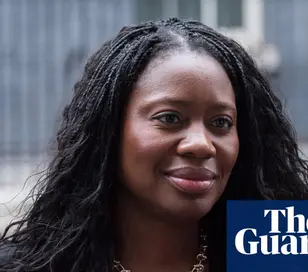
| Fahnbulleh says she backs migration reforms after ‘never lie’ remark | 6 | 7 | None | The Times (online), BBC (UK online), Daily Mail (online) |
World
| Story | World prominence | Neutrality | Lead at | UK pickup |
|---|---|---|---|---|
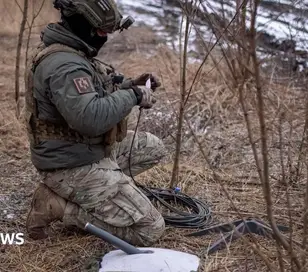
| Trump says Musk has restored Ukraine’s Starlink access | 8 | 5 | None (widely carried) | BBC (homepage), The Guardian, Daily Mail |
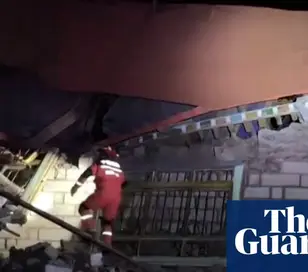
| Magnitude-7 earthquake in Tibet kills at least 16 | 8 | 9 | None (widely carried) | The Guardian, BBC, The Independent, Daily Mirror |
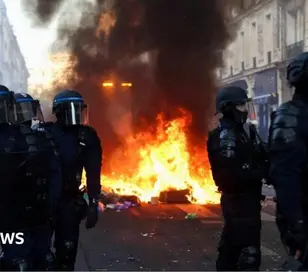
| Paris extends curfew as Marseille and Lyon ban weekend protests | 7 | 6 | France 24 (homepage) | BBC, The Times, Daily Mail |
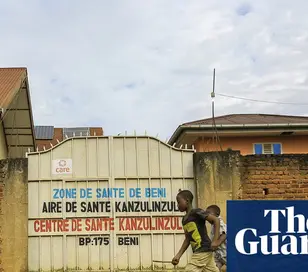
| Officials ask if Nigeria and Kenya Ebola patients crossed paths at Uganda airport | 7 | 7 | None | BBC, The Guardian, The Independent, The Telegraph |
| RSF accused of targeting el-Fasher hospitals as drone strike kills more than 150 | 6 | 6 | None | BBC (homepage), The Guardian, Sky News, The Telegraph |
What the world is leading with
The four stories leading foreign news today that weren’t already in our UK or World lists, and how much attention UK outlets gave them.
| Story | World prominence | UK attention | Neutrality | Lead story at | UK coverage at |
|---|---|---|---|---|---|
| Trump hints at new Iran strikes as seven tankers are hit in Hormuz | 9 | 5 | 4 | Al Jazeera, PressTV (homepages) | The Guardian (Gulf threats angle), The Telegraph (Netanyahu angle) |
| Netanyahu and Eisenkot neck and neck days before Israel’s election | 7 | 4 | 7 | Times of Israel, Ynet (homepages) | BBC (explainer), The Independent (poll) |
| DOJ investigates Trump ally Corey Lewandowski over DHS role | 6 | 3 | 8 | NBC News, Fox News, CBS News (homepages) | The Guardian, The Independent |
| Albania’s student protests grow as Rama blames ‘antifa’ | 5 | 2 | 6 | DW (homepage) | The Guardian (video), The Independent |
1. Government urges every household to stock up on water and food for emergencies as Streeting warns of state-sponsored terrorism
Every household in Britain is being urged to keep up to nine litres of bottled water per person and three days’ worth of food at home under new government guidance designed to help people cope with a weather, cyber or other serious emergency, the Guardian reported. The Be Ready campaign also advises keeping blankets, cash, a first aid kit, a torch with batteries and a wind-up FM radio.
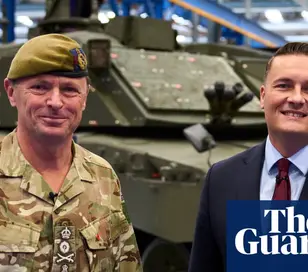
Defence Secretary Wes Streeting said Britain must prepare for “state-sponsored terrorism” by Russia or other hostile powers targeting everyday infrastructure, saying the threats were “not hypothetical but real”. He told BBC One’s Question Time the UK faced a greater threat “than we have certainly for most, if not all, of my lifetime”, and pointed to the PHP security flaw that took 32 UK government services offline, the BBC reported. Security minister Dan Jarvis called the advice “simple steps to be ready for everyday emergencies”.
Streeting said the government wanted people “to be alert but not alarmed”, the Mirror reported, though some of the Question Time audience laughed and called it scaremongering. The Daily Mail said ministers had been accused of lecturing families. The guidance led several of Friday’s front pages.
How it was framed
- The Guardian (UK, commercial) · Every Briton should stockpile water and food supplies, government advises. Focus 9: Sets out exactly what households are asked to store and why, with direct quotes from both ministers, a thorough and practical account that keeps opinion out of the reporting.
- BBC (UK, public-service) · Prepare for supply chain disruption from cyber or climate emergencies, Streeting warns. Focus 8: Leads on Streeting’s warning about cyber attacks and supply chains, linking it to the PHP flaw, factual and well sourced though it gives less space to the household checklist itself.
- The Times (UK, commercial) · Prepare for food shortages and disruption, Wes Streeting warns the public (headline). Focus 7: Puts the threat of food shortages in the headline, an accurate summary of the warning that leans slightly towards alarm rather than the routine preparedness the ministers described.
- Independent (UK, commercial) · ‘State-sponsored terrorism’ and cyber attacks to cause food shortages, Streeting says (headline). Focus 6: Builds its headline around the most dramatic phrase and a firm prediction of shortages, a framing that sharpens the minister’s warning beyond the practical advice being issued.
- Daily Mail (UK, commercial) · Nanny Burnham won’t spend more on defence but is wasting a fortune lecturing us on stockpiling tins, water, loo roll and a wind-up radio. Focus 3: Opens with a mocking ‘Nanny Burnham’ label and a complaint about defence spending, a campaigning framing that puts its own verdict ahead of what the guidance actually says.
- Daily Mirror (UK, tabloid) · Wes Streeting urges Brits to stockpile water and tinned goods: ‘be alert but not alarmed’. Focus 7: Reports the advice through Streeting’s Question Time appearance and the audience’s scepticism, lively and accurate, though the studio reaction takes up much of the piece.
- The Telegraph (UK, commercial) · Streeting: Stockpile food for cyber attacks (headline). Focus 6: Compresses the campaign into a single instruction tied to cyber attacks, a punchy framing that drops the weather emergencies the guidance also covers.
- Daily Express (UK, tabloid) · Households told to stockpile food, water and medicine in new warning (headline). Focus 7: States the advice plainly as a new warning, a factual headline focused on what families are being told to do, with little of the security context.
- The Sun (UK, tabloid) · Brits urged to prepare 3 day emergency ‘survival kit’ with cash and wind-up radio for crises from cyber attack to floods (headline). Focus 8: Lists the practical items and the range of emergencies covered, a useful consumer framing that stays close to the guidance itself.
Neutrality: 6/10. Outlets agree on what households are being asked to store, but differ between practical accounts of the checklist, alarm about shortages and openly mocking commentary on government ‘lecturing’.
2. US judge orders Donald Trump to sit for a deposition in his $10bn lawsuit against the BBC or risk having it thrown out
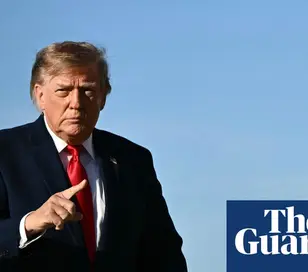
A US federal judge has ordered Donald Trump to sit for a deposition with lawyers for the BBC by 11 December as part of his $10bn defamation lawsuit against the broadcaster, or face penalties that could include the case being dismissed, CBS News reported, citing the Associated Press.
The lawsuit stems from a Panorama documentary that spliced together two parts of a speech Trump gave nearly an hour apart on 6 January 2021, before the Capitol riot. The BBC has acknowledged that the edit was misleading, the Guardian reported. At a hearing in Miami, magistrate judge Enjoliqué Lett also rejected a request from Trump’s lawyers to stop the seven-hour deposition being videotaped, though the recording will only be available to lawyers in the case, and agreed with the BBC that Trump’s team had not been forthcoming with documents.
Trump had been due to give evidence on 16 October, but his lawyers said he was unavailable “due to other matters of national importance”. The BBC told the court he spoke at a rally in Georgia that day. A spokesman for his legal team said the lawsuit was “holding the BBC accountable”, CBS reported.
How it was framed
- BBC (UK, public-service) · Trump ordered to answer questions under oath in BBC lawsuit (headline). Focus 8: Reports a ruling in a case against itself under a plain headline about answering questions under oath, a factual framing that avoids presenting it as a win for the corporation.
- The Guardian (UK, commercial) · US judge orders Trump to sit for deposition in $10bn lawsuit against BBC. Focus 8: Explains the ruling, the threat of dismissal and the documentary edit at the heart of the case, detailed and clear, while noting Trump’s false AI claim about the speech.
- CBS News (US, commercial) · Judge in Miami says Trump must sit for deposition in BBC defamation lawsuit by Dec. 11. Focus 9: Leads on the deadline and the possible penalties, then gives Trump’s missed date and his team’s statement, a tightly factual account with both sides represented.
- Al Jazeera (Qatar, state-funded) · Trump ordered to sit for deposition in BBC defamation lawsuit. Focus 8: Sets out the order and the background to the Panorama edit in a straightforward way, staying on the court ruling rather than the wider row over the BBC.
- Daily Mail (UK, commercial) · Judge orders Trump to sit for deposition as BBC defamation lawsuit backfires. Focus 6: Frames the ruling as the lawsuit ‘backfiring’ on Trump, a judgement in the headline that goes beyond the order itself, though the article reports the hearing in detail.
- The Telegraph (UK, commercial) · Trump ordered to sit for deposition in BBC case after saying he was too busy (headline). Focus 6: Ties the order to Trump saying he was too busy, a pointed framing that highlights his earlier excuse ahead of the legal substance of the ruling.
- NBC News (US, commercial) · Judge orders Trump to sit for deposition in his $10 billion lawsuit against the BBC. Focus 9: States the ruling and the sum at stake in a plain headline, a tightly factual framing with no loaded language about either party.
- CNN (US, commercial) · Judge insists Trump must be deposed in his $10B lawsuit against the BBC, warns it could be tossed in fight over records (headline). Focus 8: Adds the warning that the case could be thrown out over records, a relevant detail in a factual headline, though ‘insists’ adds a little drama.
- Sky News (UK, commercial) · Donald Trump ordered by judge to sit for deposition in his $10bn defamation lawsuit against the BBC (headline). Focus 9: Gives the order and the size of the claim plainly, a factual framing that stays on the court decision.
- Independent (UK, commercial) · Trump ordered to sit for deposition in $10bn defamation case against BBC (headline). Focus 9: States the order in neutral terms with the value of the claim, a factual headline with no added commentary.
- Fox News (US, commercial) · Judge orders Trump to give deposition for his $10 billion defamation lawsuit against BBC (headline). Focus 9: Reports the order straightforwardly in its headline, a factual framing that matches the agencies and does not take sides in the dispute.
- Reuters (International, commercial) · Trump ordered to sit for deposition in his $10 billion BBC lawsuit (headline). Focus 9: States the ruling in a short plain headline, a tightly factual framing that gives the sum at stake without any judgement on either side of the case.
- France 24 (France, state-funded) · Judge orders Trump to give deposition in BBC lawsuit by Dec 11 (headline). Focus 9: Leads on the order and the December deadline, a factual framing with no loaded language that keeps the focus on the court’s decision rather than the personalities.
Neutrality: 8/10. Outlets give closely matching accounts of the order and the deadline, differing mainly where a few British papers frame it as a setback or highlight Trump’s earlier excuse.
3. Storm Austen brings an amber warning, school closures and possible danger to life as a second storm follows close behind
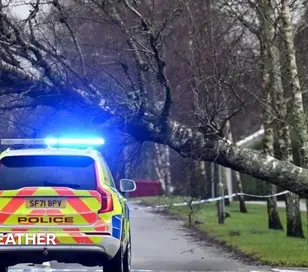
An amber weather warning came into force in parts of the UK as Storm Austen brought powerful winds and heavy rain on Friday, the BBC reported. South West England is forecast to be worst hit, with gusts of 60 to 70mph and up to 80mph in exposed parts of Cornwall and Devon, where the Met Office warning runs until 10:00 BST. The Met Office warned of travel disruption, power cuts and a possible danger to life from flying debris and large waves.
Yellow warnings cover most of England and Wales, with gusts of 45 to 60mph, and part of Scotland including Glasgow and Edinburgh. A number of schools are closed or opening late, the BBC said, and the Mirror reported that 66 schools, most of them in Cornwall, had changed their opening times. Train cancellations and speed restrictions are possible, and ferry sailings between Pembrokeshire and Ireland have been cancelled.
Storm Austen is the first named storm of the season, the Mirror reported. Channel 4 News said the UK was braced for two storms in two days, and the Independent and Express reported that a second storm, Boelo, is expected to bring 80mph winds this weekend.
How it was framed
- BBC (UK, public-service) · Amber warning in place as Storm Austen hits parts of UK. Focus 9: Sets out where the warnings apply, expected gust speeds and the effect on schools, trains and ferries, a clear practical forecast with no exaggeration of the risk.
- Daily Mirror (UK, tabloid) · Storm Austen closes 66 UK schools as ‘danger to life’ warning issued. Focus 7: Leads on school closures and the ‘danger to life’ phrase, accurate and useful for parents, though the headline foregrounds the most alarming wording of the warning.
- Sky News (UK, commercial) · Amber weather warning in place as named storm hits UK, with another hours away (headline). Focus 8: Gives the warning and the second storm behind it in a factual headline, a calm framing focused on what is happening and what comes next.
- Independent (UK, commercial) · Storm Austen live: ‘Danger to life’ warning as 80mph winds hit UK (headline). Focus 6: Puts the top gust speed and ‘danger to life’ in the headline, a dramatic framing that applies the worst conditions in exposed spots to the whole country.
- Daily Express (UK, tabloid) · Horror new map shows huge DOUBLE storm to smash UK with 80mph gales, 108 areas hit (headline). Focus 3: Uses ‘Horror’, capital letters and ‘smash’ to sell a weather map, a sensational framing that adds alarm but little information about the actual warnings.
- Channel 4 (UK, public-service) · UK braced for two storms in two days (headline). Focus 8: Summarises the back-to-back storms in a plain headline, a factual framing that avoids loaded language, though it gives no detail on where the worst conditions are expected.
- The Telegraph (UK, commercial) · Back-to-back storms to strike Britain (headline). Focus 8: States the forecast of two storms plainly, a concise factual framing with no dramatic adjectives, though it offers little on the specific warnings in force.
Neutrality: 8/10. Outlets agree on the warnings, the worst-hit areas and the second storm, differing mainly in how dramatically tabloid headlines present the danger.
4. Detective raped by a fellow Met officer says the force’s handling of her case was like being raped again and calls on Sir Mark Rowley to resign
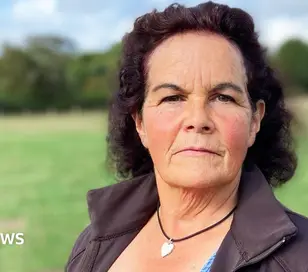
A Metropolitan Police detective who was raped by a fellow officer has told the BBC that Scotland Yard’s handling of her case was “like being raped all over again”. Det Con Linda Williams was attacked in 2004 by PC David Carrick, a serial abuser jailed for life in 2023 for sexual offences against her and 11 other women. She has waived her legal right to anonymity to speak out.
Williams has post-traumatic stress disorder because of the attack and sought damages from the Met for failing to protect her. She told the BBC the lengthy civil case left her feeling suicidal, and that the “worst thing” was when lawyers acting for the commissioner challenged the severity of her PTSD on the basis that she had been raped only once. She has settled the case, and the Met has paid compensation without accepting liability.
In what the BBC called an unprecedented move for a serving officer, she is calling for Commissioner Sir Mark Rowley to resign, saying he has failed to change police culture as promised. The Met said it had tried to reduce further distress to her and to deal with her claims “as quickly and compassionately as possible”, and called her continued commitment to public service commendable.
How it was framed
- BBC (UK, public-service) · Detective raped by colleague says Met handling of case ‘like being raped again’. Focus 8: Centres the officer’s own account in a detailed interview, includes the Met’s full response and the history of Rowley’s promises, a careful report that necessarily leads on her testimony.
Neutrality: 8/10. This is a BBC interview, and its account sets out both the officer’s claims and the Met’s response in full, leaving little room for conflicting versions.
5. Energy secretary says she fully backs the government’s migration reforms after joking that she would never lie
Energy Secretary Miatta Fahnbulleh has said she fully supports Home Secretary Shabana Mahmood’s migration reforms, after joking to journalists that she had not backed them in an interview because she had promised herself she would “never lie”, the BBC reported.
Fahnbulleh had repeatedly declined in a Sky News interview with Sophy Ridge on Wednesday to say whether she supported plans to make migrants wait longer for permanent residency, the Guardian reported. At a journalists’ event in Westminster on Thursday she said: “I made three promises to myself when I came into politics. The first was never lie, which has created some awkward moments.” In a later statement she said the remark was meant to be “light-hearted” and “self-deprecating”, adding: “I fully support our home secretary and the government’s position on migration reform.”
The government wants to double the time most migrant workers wait to qualify for permanent residence from five to 10 years, and up to 20 years for refugees, the BBC said. A significant number of Labour MPs and trade unions want the plans watered down. The Daily Mail said she had earlier criticised the policy on her constituency website. No 10 would not say whether it asked her to clarify her position, the Guardian reported.
How it was framed
- BBC (UK, public-service) · Fahnbulleh says she backs home secretary on migration after comments to journalists. Focus 9: Reports her remark and her clarification, then explains what the residency reforms would change and why MPs object, a balanced account that stays on the policy facts.
- The Guardian (UK, commercial) · Minister insists she backs migration policy after joking she couldn’t lie about supporting it. Focus 7: Gives the full quote and the context of the earlier interview, detailed and accurate, though the headline leans on the awkwardness of the joke rather than the policy split.
- Daily Mail (UK, commercial) · Miatta Fahnbulleh makes U-turn to back immigration plan. Focus 6: Frames the clarification as a ‘U-turn’ and counts how many times she refused to answer, a political framing that stresses embarrassment over what the reforms involve.
- The Times (UK, commercial) · Miatta Fahnbulleh backs migrant crackdown after ‘awkward’ interview (headline). Focus 7: States the change of position and quotes her own word ‘awkward’, a fair summary that uses ‘crackdown’ to describe the reforms.
- The Telegraph (UK, commercial) · Energy Secretary refuses 16 times to back Mahmood’s migrant crackdown (headline). Focus 5: Leads on the number of refusals in the earlier interview, a framing built around the cabinet split and her evasions rather than her later support.
Neutrality: 7/10. Outlets agree on what Fahnbulleh said and how she clarified it, but differ between accounts focused on the policy and those framing it as a U-turn or an embarrassment.
6. Trump says Elon Musk has restored Ukraine’s Starlink access after restrictions hampered Kyiv’s drones and air defences
US President Donald Trump has said Elon Musk has restored Ukraine’s access to Starlink, after restrictions on the military-grade Starshield network hampered Kyiv’s armed forces, the BBC reported. Trump declined to discuss a Wall Street Journal report that he had called Musk and told him to lift the limits. “I don’t want to comment on it, whether I called or whether somebody else called, doesn’t make any difference, I guess. The bottom line, he put it back,” he told reporters, Al Jazeera reported.
Ukrainian President Volodymyr Zelensky had said connectivity had yet to be fully restored, and a European official told the Associated Press the service was still not fully working, the Guardian reported. Ukrainian officials say the restrictions left many of the drones used to strike behind the front lines inoperable and hampered air defences. Musk has denied he was behind the slowdown, and the Trump administration has denied instructing his company to restrict access.
The restrictions came as Trump pressed Zelensky to stop Ukrainian attacks on Russian oil refineries, which he says have pushed up prices, the BBC said. RT reported that the Wall Street Journal’s anonymous sources contradicted Musk’s denials and said Zelensky had blamed Washington without evidence.
How it was framed
- BBC (UK, public-service) · Musk has restored access to Ukraine’s Starlink network, Trump says. Focus 8: Reports Trump’s claim alongside Zelensky’s caution and Musk’s denial, then explains the wider pressure over refinery strikes, a balanced account that keeps the battlefield impact in view.
- Al Jazeera (Qatar, state-funded) · Trump says Musk restored Ukraine’s Starlink access amid Russia war. Focus 8: Quotes Trump at length and sets out the timeline of the restrictions and the blame game, a factual account that stays on who said what.
- The Guardian (UK, commercial) · Trump, Musk, Zelenskyy: who is blaming who in the Ukraine-Starlink row? Focus 6: Organises the story around the personalities trading blame, a useful explainer that puts the political row ahead of the confirmed facts about the service.
- RT (Russia, state) · MSM ‘sources’ contradict Musk on Starlink for Ukraine. Focus 3: Mocks Western media sources in quotation marks and repeatedly says Zelensky spoke without evidence, a hostile framing that casts doubt on Ukraine rather than reporting the restoration.
- New York Times (US, commercial) · Trump Asked Musk to Reverse Limits on Ukraine’s Military Internet Use (headline). Focus 7: States the reported phone call as fact in the headline, a strong sourced scoop that puts Trump’s role first rather than the state of the service.
- Washington Post (US, commercial) · Trump administration offers mixed messages on limits to Ukraine’s Starshield access (headline). Focus 7: Frames the story around contradictory official statements, a fair angle that focuses on the administration’s messaging more than on Ukraine’s battlefield needs.
- Reuters (International, commercial) · Trump says Musk restored Ukraine’s Starlink access, declines to say if they spoke (headline). Focus 9: Reports exactly what Trump said and what he would not say, a tightly factual headline with no added interpretation.
- CBS News (US, commercial) · Elon Musk’s Starlink and Starshield, and what they mean to Ukraine. Focus 8: Explains the two services and how Ukraine’s forces depend on them, an informative background framing that steps back from the political blame.
- Ynet (Israel, commercial) · Report: Trump asked Musk to remove restrictions on Starlink system in Ukraine (headline). Focus 7: Passes on the reported phone call with clear attribution, a factual framing centred on Trump’s role rather than on whether the service is now working in Ukraine.
Neutrality: 5/10. Western outlets broadly agree on Trump’s comments and the disputed restoration, while Russian state media frames the story around doubting Ukraine’s claims and Western sources.
7. Magnitude-7 earthquake in Tibet kills at least 16 people and collapses hundreds of homes
A magnitude-7 earthquake has struck China’s Tibet region, killing at least 16 people and collapsing hundreds of homes around the northern city of Nagqu, official media said. The quake struck at 10:33pm local time on Thursday, with its epicentre 191km east-northeast of Nagqu in a sparsely populated, high-altitude area, according to the US Geological Survey, which put its depth at 18km, the Guardian reported.
At least 339 homes and 20 livestock sheds collapsed, the Nagqu media office said. Al Jazeera reported 46 people injured, 11 of them seriously, while CBS News and the Guardian put the number of injured at 54, and Reuters later reported that injuries had risen to 65. More than 1,600 people were deployed for rescue efforts, and supplies including 1,000 prefabricated housing units and about 3,000 tents and folding beds arrived in the region.
A level-II emergency response was activated, Xinhua news agency said. The USGS recorded at least seven aftershocks of between 4.3 and 5.2. Videos from state broadcaster CCTV showed workers running out of restaurants and goods falling from supermarket shelves. Al Jazeera said it was the strongest earthquake to hit China since January 2024.
How it was framed
- The Guardian (UK, commercial) · Magnitude-7 earthquake hits China’s Tibet, killing at least 16 and destroying hundreds of homes. Focus 9: Sets out the toll, the damage, the rescue effort and the aftershocks in measured terms, a tightly factual account sourced to officials and the USGS.
- Al Jazeera (Qatar, state-funded) · Magnitude 7 earthquake kills 16 people in China’s Tibet. Focus 9: Gives the casualties, the emergency response and the location in a short factual report, adding useful context that it was China’s strongest quake since 2024.
- CBS News (US, commercial) · At least 16 people killed by powerful 7.0 magnitude earthquake in Tibet, officials say. Focus 9: Reports the toll, damage and relief supplies from officials and the USGS, a clear factual account that stays on the disaster and the response.
- RT (Russia, state) · Hundreds of houses collapse as powerful earthquake hits China. Focus 8: Leads on the collapsed homes and embeds social media posts, factual on the toll and depth, though it leans on video content more than on the relief effort.
- DW (Germany, public) · 16 killed, dozens injured in earthquake in Tibet, hundreds of homes destroyed. Focus 9: States the deaths, injuries and destruction plainly, a factual account that sticks closely to official figures and avoids dramatic description of the scenes in Nagqu.
- CGTN (China, state) · 16 killed after M7.0 quake hits China’s Xizang, rescue underway (headline). Focus 8: Reports the toll and stresses that rescue is under way, using the official Chinese name Xizang for Tibet, a factual framing in line with state messaging.
- Daily Mirror (UK, tabloid) · Powerful magnitude 7 earthquake hits Tibet as people flee swaying buildings. Focus 7: Leads on scenes of people fleeing swaying buildings, vivid and accurate, though it puts the drama ahead of the casualty figures and the relief effort.
- BBC (UK, public-service) · Powerful earthquake in Tibet Nagqu area leaves 16 dead (headline). Focus 9: States the location and the death toll plainly in its headline, a tightly factual framing with no dramatic language about the scenes or the scale of damage.
- Independent (UK, commercial) · Tibet earthquake today: At least 16 dead as powerful 7.0-magnitude tremor collapses hundreds of homes (headline). Focus 8: Gives the toll and the damage in a factual headline, with a search-friendly ‘today’ label but no loaded language.
- Reuters (International, commercial) · Injuries in China’s Tibet rise to 65 after earthquake, death toll remains at 16 (headline). Focus 9: Moves the story on with updated injury figures while confirming the death toll, a precise factual framing that sticks to official numbers without adding drama.
Neutrality: 9/10. Outlets give near-identical accounts drawn from Chinese officials and the USGS, differing only in injury figures as they were updated and in Chinese state media’s use of the name Xizang.
8. Paris extends its curfew and Marseille and Lyon ban protests as France braces for another weekend of demonstrations after riots
Paris is extending a partial curfew in parts of the city until Monday, while Marseille and Lyon have imposed a total ban on protests this weekend, the BBC reported. The Louvre, Orsay and Picasso museums will be closed on Saturday as more demonstrations are expected. Movement will be banned around Place de la République and Les Halles from 11pm to 6am, and public transport in Marseille will be suspended on Saturday.
France is still reeling from last weekend, when large protests against the high cost of living and school conditions were overshadowed by riots and looting. Elsewhere only authorised union demonstrations will be allowed, President Emmanuel Macron said, and police deployments will rise by 20%. Justice Minister Gérald Darmanin said 2,700 people had been arrested and 217 jailed after fast-track trials, the BBC reported.
Macron met intelligence services and ministers on Thursday to prepare for Saturday’s national day of protests, and called for a halt to demonstrations in the coming days, CGTN reported. Prime Minister Sébastien Lecornu said earlier in the week that his “determination to restore order is absolute”. The Times and France 24 reported that shopkeepers in Paris fear new looting, with some rushing to buy weapons.
How it was framed
- BBC (UK, public-service) · Paris extends curfew as Marseille and Lyon ban protests after riots. Focus 9: Sets out exactly where curfews and bans apply, the museum closures and the arrest figures, a detailed practical account that keeps opinion out.
- CGTN (China, state) · Macron calls for halt to demonstrations in coming days. Focus 7: Centres the government’s call to stop protesting and its order measures, factual on the curfews, though it gives little space to the protesters’ grievances.
- France 24 (France, state-funded) · Curfew imposed in certain areas of Paris every night until Monday morning (headline). Focus 9: States the curfew and its duration plainly, a tightly factual headline focused on what residents need to know.
- The Times (UK, commercial) · France riots: shopkeepers in weapons rush before weekend protests (headline). Focus 5: Leads on shopkeepers arming themselves, a vivid but narrow angle that frames the weekend through fear of looting rather than the authorities’ measures or the protests’ causes.
- RT (Russia, state) · Macron bans ‘illegitimate’ protests in France (headline). Focus 5: Puts Macron’s word ‘illegitimate’ in quotation marks in the headline, a framing that casts the restrictions as a crackdown on dissent.
- New York Times (US, commercial) · In the Wake of Riots, the French Authorities Ban Some Protests (headline). Focus 8: Links the protest bans directly to last weekend’s riots in a measured headline, a factual framing with no loaded language about either the protesters or the police.
- DW (Germany, public) · France bans protests in parts of Paris as Macron slams Trump comment (headline). Focus 6: Pairs the protest bans with Macron’s row with Trump, mixing a security story with a diplomatic spat in a way that dilutes the main news.
- Ynet (Israel, commercial) · France braces for fresh unrest as Macron restricts protests and Paris shopkeepers arm themselves (headline). Focus 6: Combines the restrictions with shopkeepers arming themselves, an accurate summary of the situation that leans on the most dramatic detail rather than the official measures.
- Daily Mail (UK, commercial) · Green youth group calls for ‘students and young workers’ to join Paris-style riots. Focus 4: Uses the French unrest to attack a British Green youth group, a domestic political framing that says little about events in France themselves.
Neutrality: 6/10. Outlets agree on the curfews and bans, but differ between practical accounts of the measures, fear of looting, Russian framing of a crackdown and British political angles.
9. Health officials investigate whether Ebola patients in Nigeria and Kenya crossed paths at Uganda’s main airport
Health officials are investigating whether Ebola patients in Nigeria and Kenya may have crossed paths at Uganda’s main airport earlier this month, the BBC reported. Both travelled through Entebbe airport on 3 October, and investigators are examining whether they could have been exposed through shared equipment or other contact, the Africa Centres for Disease Control and Prevention said. Its head of emergency preparedness, Dr Wessam Mankoula, called it “one of the possible scenarios” but stressed that no link had been established.
Nigeria is dealing with its first Ebola case in more than a decade, while Kenya has confirmed nine infections, including one death. The Nigerian patient, a woman living in Abuja, is being treated in isolation and is showing signs of improvement, according to the World Health Organization. Nigerian authorities began tracing 44 of her contacts, the Guardian reported. Uganda’s health ministry said travel through the country “does not establish that infection occurred here”.
The outbreak began in the Democratic Republic of Congo, where the WHO said infections had rebounded after a brief decline, with 9,637 confirmed cases and 4,646 deaths as of 19 October, CGTN reported. The New York Times said the outbreak had reached its widest expansion ever.
How it was framed
- BBC (UK, public-service) · Nigeria and Kenya Ebola patients may have crossed paths at Uganda airport, officials say. Focus 9: Explains the airport theory carefully, quoting officials that no link is established, then gives the patient’s travel and condition, a precise and cautious account.
- The Guardian (UK, commercial) · Nigeria confirms Ebola case as outbreak spreads into western Africa. Focus 8: Sets out the confirmed case, contact tracing and Uganda’s denial, a factual account that frames the news around the outbreak’s geographic spread.
- CGTN (China, state) · Ebola outbreak rebounds in DR Congo: WHO. Focus 8: Leads on the WHO’s figures from Congo and the outbreak’s international spread, a data-driven account that puts the epicentre ahead of the new cases.
- New York Times (US, commercial) · Ebola Outbreak in Africa Reaches Widest Expansion Ever (headline). Focus 7: Frames the story around the record spread, accurate and significant, though the superlative headline stresses scale over the specific investigations.
- Al Jazeera (Qatar, state-funded) · WHO warns ‘more complex’ Ebola outbreak now present in 3 African countries (headline). Focus 8: Attributes the warning to the WHO and states its reach, a factual framing focused on the health authority’s assessment.
- Reuters (International, commercial) · Late detection in Nigeria raises alarm as Ebola spreads across Africa (headline). Focus 7: Puts the late detection and alarm first, a fair but pointed framing that highlights failings in Nigeria’s response.
- Independent (UK, commercial) · First Ebola patients in Nigeria and Kenya might have crossed paths at Uganda airport (headline). Focus 9: States the investigation’s airport theory with appropriate caution in its headline, a factual framing that matches the agencies and does not overstate the link.
- TASS (Russia, state) · Number of Ebola infections in DR Congo surpasses 9,700 (headline). Focus 8: Reports the rising case count in Congo plainly, a factual framing that leaves out the new spread to West Africa.
Neutrality: 7/10. Outlets agree on the facts of the spread, but differ in emphasis between the cautious airport investigation, record expansion and criticism of late detection.
10. BBC investigation finds Sudan’s RSF systematically attacked el-Fasher’s hospitals as a drone strike on a market kills more than 150
A BBC investigation has found evidence that Sudan’s paramilitary Rapid Support Forces (RSF) systematically destroyed el-Fasher’s healthcare system during their long siege and takeover of the Darfur city a year ago. Using sources on the ground, the BBC found details of at least 43 separate attacks on hospitals and healthcare sites between May 2024 and October 2025, and data showing 55 medical workers killed and 120 injured.
UN human rights chief Volker Türk called the findings “deeply disturbing” and said the attacks may amount to war crimes. The RSF’s health minister described the allegations as propaganda and a deliberate attempt to smear the group. The BBC noted that both sides in the war have been accused of attacks on health facilities, and that the army is believed to have carried out drone strikes on a hospital in RSF-held East Darfur in March, which it denies.
Earlier this week a drone strike on a market in the disputed Abyei region between Sudan and South Sudan killed at least 153 people, Sky News and the Washington Post reported. The UN condemned what it called “relentless drone strikes” across the country, saying they were taking a devastating toll on communities, CGTN reported.
How it was framed
- BBC (UK, public-service) · Hospitals deliberately targeted by Sudan’s RSF fighters, BBC investigation finds. Focus 8: Presents detailed evidence of attacks on health care with the UN’s response and the RSF’s denial, a rigorous investigation whose headline states its own findings firmly.
- CGTN (China, state) · UN condemns drone strikes in Sudan. Focus 9: Reports the UN’s condemnation and lists specific strikes on civilians, a factual account that attributes blame to no side and stays on the toll.
- Sky News (UK, commercial) · At least 153 people killed in drone strike on disputed Sudan-South Sudan region (headline). Focus 9: States the death toll and the location in the disputed border region plainly, a tightly factual headline that avoids blaming either side without evidence.
- The Guardian (UK, commercial) · Drone strike kills more than 150 at market in Sudanese war (headline). Focus 9: Gives the toll and the market setting in a measured headline, a factual framing with no loaded language.
- New York Times (US, commercial) · Drone Strike Kills More Than 150 in Abyei in Sudan’s Civil War (headline). Focus 9: Places the strike precisely in Abyei and in the context of the civil war, a factual and informative headline.
- Washington Post (US, commercial) · Drone strike on a market in disputed African region of Abyei kills at least 153 (headline). Focus 9: Reports the strike, the market setting and the death toll plainly, a tightly factual framing that places the attack precisely in the disputed region of Abyei.
- Al Jazeera (Qatar, state-funded) · How Sudan’s shift to drone warfare is fuelling a civilian crisis (headline). Focus 7: Steps back to analyse the move to drone warfare, a useful explanatory framing that puts the trend ahead of the latest attacks.
- Ynet (Israel, commercial) · At least 226 reported killed in Sudan drone strike on crowded market (headline). Focus 6: Uses a higher reported toll than other outlets, a framing that emphasises scale with figures that were not widely confirmed.
- ABC Australia (Australia, public) · Wave of drone attacks in Sudan kill more than 300 people (headline). Focus 7: Combines several attacks into a single toll, an accurate framing of the wider wave that blurs the individual incidents.
Neutrality: 6/10. Outlets agree that drone strikes are killing large numbers of civilians, but differ on death tolls and on whether they focus on a single attack, the wider trend or the BBC’s allegations against the RSF.
11. Trump signals new strikes on Iran as Tehran says seven tankers were hit in the Strait of Hormuz in a single day
US President Donald Trump has signalled possible further military action against Iran, saying the US has knocked the “hell out” of the country, Al Jazeera reported. Iran says seven oil tankers were damaged in the Strait of Hormuz in a single day, the highest daily toll since the US-Israeli war with Tehran began. CBS News reported that Trump said Iran was making up the ship strikes to drive up oil prices, and TASS reported that Brent crude rose above $114 a barrel for the first time since May.
Iran’s Revolutionary Guards said four vessels that had used unauthorised routes were struck while transferring oil in the northern Persian Gulf, and three more caught fire after hitting mines, PressTV reported. The IRGC warned of retaliation against US bases if Washington kept encouraging ships to use those routes. The Guardian reported that Iran had threatened to strike oil and AI facilities across the Gulf if the US and Israel renewed attacks. The Times of Israel cited a report that Israel’s military chief saw no operational need for a strike before Israel’s election.
How it was framed
- Al Jazeera (Qatar, state-funded) · Iran war live: Trump hints new strikes, says US knocked ‘hell out’ of Iran. Focus 7: Leads on Trump’s threat and the record tanker toll, factual in its key points, though its live format puts the rhetoric of both sides ahead of verified detail.
- PressTV (Iran, state-run) · ‘Serious warning’: IRGC Navy says four offending vessels hit in northern Persian Gulf. Focus 3: Relays the IRGC statement in full, calling the ships ‘offending’ and the US ‘aggressor’, a state framing that presents attacks on tankers as lawful enforcement.
- CBS News (US, commercial) · Trump says Iran is making up strikes on ships to drive up oil prices (headline). Focus 6: Builds the headline around Trump’s claim that Iran is inventing attacks, an attributed framing that gives prominence to an unverified accusation.
- DW (Germany, public) · Is Iran ready for another major US attack after midterm elections? Focus 7: Explains reported US and Israeli plans and how elections shape the timing, a useful analytical framing that looks ahead more than at the latest attacks.
- The Guardian (UK, commercial) · Iran threatens to strike oil and AI facilities across Gulf if US and Israel renew attacks (headline). Focus 7: Focuses on Iran’s threats against Gulf infrastructure, an accurate angle that centres the risk to the region rather than the tanker strikes themselves.
- Times of Israel (Israel, commercial) · Report: IDF chief says no operational need for strike on Iran before Israeli election (headline and summary). Focus 7: Leads on the Israeli military’s assessment and links it to fresh tanker attacks, an attributed framing seen through Israel’s election timing.
- TASS (Russia, state) · Price of Brent oil up above $114 per barrel on ICE first since May (headline). Focus 8: Reports the market effect in a plain factual headline, a narrow economic framing that leaves out the military events behind it.
- Associated Press (US, cooperative) · Iran says 7 oil tankers attacked in the Strait of Hormuz as fears grow of a return to war (headline). Focus 8: Attributes the tanker figure to Iran and adds the wider context of war fears, a factual framing with careful sourcing.
- Al Arabiya (Saudi, commercial) · Iran’s IRGC threaten to hit US bases in retaliation for Hormuz escorts (headline). Focus 7: Puts the IRGC threat against US bases first, an accurate framing of the latest escalation that focuses on threats rather than the damage to shipping.
Neutrality: 4/10. Iranian media present the tanker strikes as enforcement against an aggressor, while US outlets give prominence to Trump’s claim that Iran is inventing them, leaving accounts sharply divided.
12. Netanyahu and Eisenkot are in a dead heat days before Israel’s election, a final poll shows
Prime Minister Benjamin Netanyahu and his main challenger, former military chief Gadi Eisenkot, are in a dead heat five days before Israel’s election on Tuesday, according to a final poll by the Times of Israel. Most respondents said they wanted Netanyahu to resign if he cannot form a government, the paper reported.
The New York Times reported that Eisenkot, leading in some polls, calls Netanyahu an “anti-leader”, but that his low-key campaigning style is worrying supporters. Al Arabiya reported that Eisenkot has ruled out serving under Netanyahu. Ynet said Netanyahu was rallying Likud strongholds while Eisenkot and Naftali Bennett chased swing voters. The Independent reported a poll suggesting Netanyahu’s far-right coalition was on course to lose its majority. DW reported that Israelis living abroad were travelling in large numbers to vote, and the BBC said Arab parties could hold a critical balance of power. Al Jazeera reported that the US vice president had declined to endorse Netanyahu.
How it was framed
- Times of Israel (Israel, commercial) · Netanyahu and Eisenkot in dead heat five days before election, final ToI poll shows (headline and summary). Focus 8: Leads on its own poll findings and voter views on Netanyahu’s future, a data-driven framing that stays on the state of the race.
- New York Times (US, commercial) · Gadi Eisenkot Couldn’t Be More Unlike Netanyahu. Can He Beat Him? (headline and summary) Focus 6: Profiles the challenger through his contrast with Netanyahu, a personality framing that puts style and character ahead of policies and polling detail.
- Ynet (Israel, commercial) · Final 100 hours: Netanyahu rallies Likud strongholds as Eisenkot and Bennett chase swing voters (headline). Focus 7: Frames the campaign’s final days around strategy and voter targeting, a fair horse-race angle with little on the issues at stake.
- Independent (UK, commercial) · Netanyahu’s far-right coalition on course to lose majority in Israeli elections, new poll suggests (headline). Focus 6: Puts a single poll’s projection of defeat in the headline, attributed but more definitive in tone than the tight race other polls show.
- Al Arabiya (Saudi, commercial) · Netanyahu’s main election rival rules out serving under him (headline). Focus 8: Reports a concrete campaign position in a plain headline, a factual framing focused on coalition arithmetic rather than on the personalities of the two leading candidates.
- Al Jazeera (Qatar, state-funded) · ‘Not getting involved’: US vice president refuses to endorse Netanyahu (headline). Focus 6: Frames the election through Washington’s stance on Netanyahu, a relevant but outside angle that says little about Israeli voters.
- DW (Germany, public) · Israelis living abroad are traveling en masse to vote (headline). Focus 7: Focuses on Israelis abroad travelling home to vote, a human-interest framing that sidelines the main contest and the issues dividing the leading candidates.
- BBC (UK, public-service) · How Arab parties could hold critical balance of power in Israeli election (headline and summary). Focus 8: Explains the potential role of Arab voters and parties, an informative framing that adds context other outlets leave out.
- Arab News (Saudi, commercial) · Israel’s election may change its leader, but not Iran war policy (headline). Focus 6: Looks past the vote to argue policy will not change, an analytical framing that puts a regional judgement ahead of the race itself.
Neutrality: 7/10. Outlets agree the race is close, differing mainly in whether they focus on polls, personalities, coalition arithmetic or what a change of leader would mean for the region.
13. Justice Department opens criminal investigation into longtime Trump ally Corey Lewandowski over his role at Homeland Security
Justice Department prosecutors are investigating Corey Lewandowski, a longtime ally of President Donald Trump and former top aide to ousted Homeland Security Secretary Kristi Noem, ABC News reported, citing two sources. The investigation is examining the department’s contracting activities during the first year of Trump’s second term and followed a referral from the DHS inspector general, Joseph Cuffari.
Reuters, cited by the Guardian, reported that Lewandowski is under criminal investigation over allegations that he profited from his government role. An attorney for Lewandowski said he had not been contacted by the Justice Department and “denies any wrongdoing”. The Justice Department declined to comment, and ABC said the investigation was at an early stage.
Asked about the investigation, Trump said he did not know the specifics. “All I know is I want my people to be honest. And if they’re not gonna be honest they have to be prosecuted,” he said, ABC reported. ABC described the inquiry as a rare instance of Trump’s Justice Department examining an ally of the president.
How it was framed
- ABC News (US, commercial) · DOJ probing Trump ally Corey Lewandowski’s actions at DHS after IG referral: Sources. Focus 9: Sets out the scope of the inquiry, its origin and the denial from Lewandowski’s lawyer, with Trump’s response, a careful sourced account that avoids prejudging the outcome.
- The Guardian (UK, commercial) · Department of Justice opens criminal investigation into Corey Lewandowski. Focus 8: Reports the criminal investigation and the profiting allegation with clear attribution to officials, factual and concise, though light on Lewandowski’s denial.
- NBC News (US, commercial) · DHS watchdog refers its Corey Lewandowski investigation to Justice Department for review (headline). Focus 9: Focuses on the procedural step of the referral, a precise and cautious framing that does not overstate the investigation.
- CBS News (US, commercial) · DOJ investigating Trump ally Corey Lewandowski over DHS role, sources say (headline). Focus 8: States the investigation with clear attribution to sources, a factual framing that notes his close ties to Trump without suggesting what the outcome will be.
- Fox News (US, commercial) · DOJ opens investigation into Trump ally Corey Lewandowski (headline). Focus 8: Reports the investigation plainly on its homepage, a factual framing that describes him as a Trump ally and does not play down the news.
- New York Times (US, commercial) · Justice Dept. Opens Inquiry Into Corey Lewandowski (headline). Focus 9: States the news in a short plain headline, a tightly factual framing that avoids describing the allegations or Lewandowski’s political ties.
- CNN (US, commercial) · Justice Department investigating Republican operative Corey Lewandowski over alleged contract misconduct at DHS, sources say (headline). Focus 7: Specifies alleged contract misconduct and labels him a Republican operative, informative but with a slightly more pointed description.
Neutrality: 8/10. Outlets give closely matching accounts of the investigation and its origin, differing mainly in how they describe Lewandowski and how much weight they give the allegations.
14. Albania’s student-led anti-corruption protests grow as Prime Minister Edi Rama blames ‘antifa’ and lawmakers scuffle in parliament
Albania’s anti-government protests led by students are growing, with college and high school students clashing with police almost daily, DW reported. Prime Minister Edi Rama, in office since 2013, has claimed that “antifa” is behind the unrest, an explanation DW said few were accepting.
The country has seen nearly five months of protests, sparked when plans emerged for Jared Kushner and associates to build a luxury hotel complex in a nature reserve, DW said. Protesters denounce corruption, mismanaged universities and the rising cost of education, and are calling for Rama to resign. Police used water cannon outside the Education Ministry in Tirana this week, and the Washington Post reported clashes for an eighth day. The Guardian and the Independent reported that a scuffle broke out in parliament over the protests.
How it was framed
- DW (Germany, public) · Albania’s student protests are only getting bigger. Focus 7: Reports from the protests with interviews and explains their origins, a detailed account that leans towards the protesters’ view and questions Rama’s explanation.
- Washington Post (US, commercial) · Albanian police clash with anti-government protesters for an 8th day (headline). Focus 8: States the clashes and how long they have lasted in a plain headline, a factual framing focused on events on the streets of Tirana.
- Independent (UK, commercial) · Fists fly in Albanian parliament as protests continue to roil the country (headline). Focus 6: Leads on the brawl in parliament with colourful language, a dramatic framing that puts the scuffle ahead of the protesters’ demands.
- The Guardian (UK, commercial) · Scuffle breaks out in Albanian parliament over student protests (headline). Focus 7: Links the parliamentary scuffle to the protests in a plain headline, a factual framing centred on the most visual moment.
- PressTV (Iran, state-run) · Anti-government protests turn violent in Albania (headline). Focus 6: Stresses violence in its headline, a framing that highlights unrest in a Western-aligned country without the protesters’ grievances.
- New York Times (US, commercial) · Student Protests Mushroom Across Europe, Exposing Bleak Views of the Future (headline). Focus 6: Places Albania within a wider European youth protest trend, an analytical framing that dilutes the country’s specific events.
Neutrality: 6/10. Outlets agree the protests are growing, but differ between street-level reporting, focus on the parliamentary brawl and wider framings about European youth discontent.